


Antennas, Antenna Cables, Wireless Products: Technical Articles
SMA Connector Guide: SMA vs RP-SMA, Male/Female, Specs & How to Choose
An SMA connector (SubMiniature version A) is a 50-ohm, threaded RF coaxial connector rated for use up to 18 GHz, and it is the most common interface on WiFi, cellular, GPS, LoRa and IoT antennas. If you are terminating a coax run or matching an antenna to a radio, the two questions that trip up most buyers are whether you need a standard SMA or an RP-SMA, and whether you need male or female. This guide answers both, lists the specs worth verifying, and shows how to match an SMA connector to your cable and equipment.
What is an SMA connector?
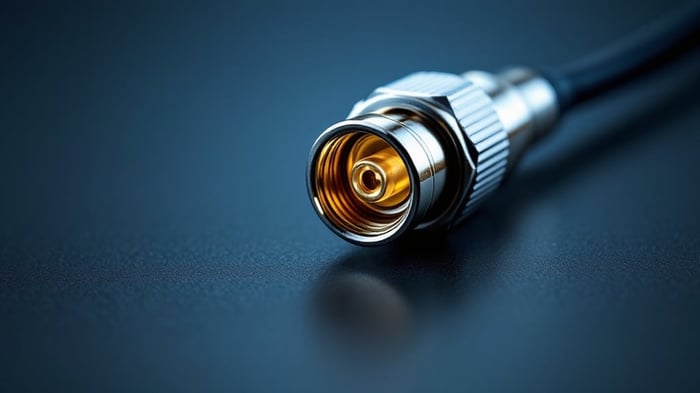
An SMA connector is a small, threaded coaxial connector developed for microwave RF work. Its defining traits are a 50-ohm characteristic impedance, a screw-on (threaded) coupling rather than a push-on or bayonet mechanism, and a broadband performance range that typically runs from DC to 18 GHz on precision versions. The threaded interface gives it a repeatable, vibration-resistant connection, which is why it dominates on antennas for WiFi (2.4/5/6 GHz), cellular (600 MHz–6 GHz), GPS (1575.42 MHz L1) and sub-GHz IoT radios.
Because SMA is a 50-ohm interface, it should be paired with 50-ohm coax and 50-ohm radios. Mixing in 75-ohm cable introduces an impedance mismatch that raises VSWR and reflects power back toward the source — for the mechanism behind that, see our explainer on VSWR and impedance matching in antennas.
SMA connector specifications to verify
Not every "SMA" part performs identically. Before you buy, confirm these against the datasheet — do not assume:
- Impedance: 50 ohms (standard for SMA).
- Frequency range: commonly specified to 18 GHz on standard SMA; some precision SMA is rated higher. For WiFi/cellular/GPS work you are well within range.
- Coupling: threaded, typically a 1/4-36 UNS-2 thread.
- Plating: gold-plated center contact is typical for low, stable contact resistance; body plating is often nickel or gold.
- Cable compatibility: the connector body must be sized for your coax (e.g. RG174/RG316, RG58, LMR-195/LMR-240/LMR-400). A connector built for RG174 will not terminate LMR-400.
- Torque: SMA has a recommended mating torque — over-tightening damages the interface. See the reference figures in our guide to torque ratings of SMA and RP-SMA connectors.
SMA vs RP-SMA: the difference that matters most
This is where the majority of ordering mistakes happen. RP-SMA (Reverse Polarity SMA) is mechanically identical to standard SMA in thread and shell, but the center contact genders are swapped. It was introduced largely so consumer WiFi equipment could meet regulatory rules discouraging easy antenna swaps — which is why RP-SMA is the norm on routers, access points and many WiFi USB adapters, while standard SMA dominates cellular, GPS and industrial RF.
- Standard SMA male = center pin, threads on the inside of the coupling nut.
- Standard SMA female = center socket, threads on the outside.
- RP-SMA male = the shell/threads of a male, but with a socket where the pin would be.
- RP-SMA female = the shell/threads of a female, but with a pin where the socket would be.
The practical takeaway: SMA and RP-SMA will start to thread together because the shells match, but the center contacts will not mate — so they cannot make a working connection. Always confirm which family your equipment uses. For a deeper look at RP-SMA specifically, read our RP-SMA connector specifications guide, and for the full electrical and mechanical breakdown of standard SMA, see SMA connectors: specifications, applications and characteristics.
How to choose the right SMA connector
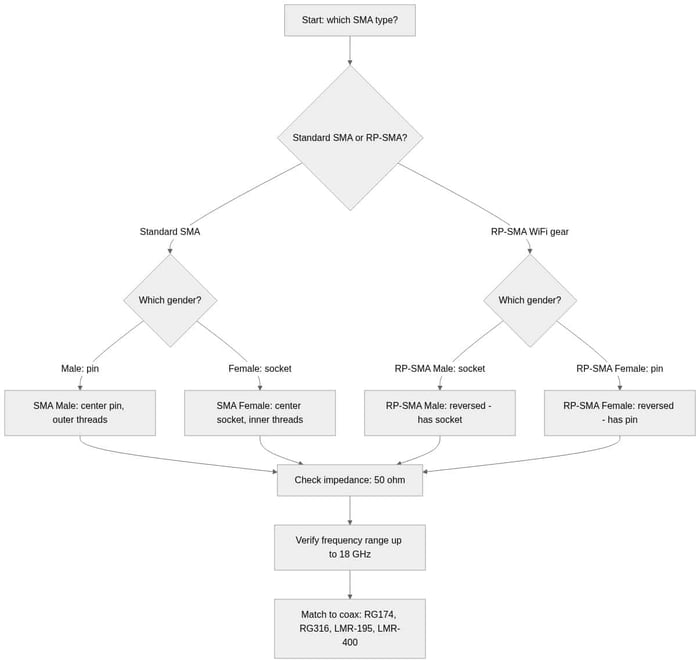
Work through it in order: family first (SMA vs RP-SMA), then gender, then impedance and frequency, then coax match. The flow below summarizes the decision.
1. Family: SMA or RP-SMA
Match the family already on your equipment. WiFi routers, access points and most WiFi adapters are usually RP-SMA; cellular, GPS, LoRa and industrial radios are usually standard SMA.
2. Gender
Choose the mate of what your device presents. Remember that RP-SMA inverts the pin/socket, so an "RP-SMA male" cable end carries a socket.
3. Impedance and frequency
Confirm 50 ohms and that the frequency rating covers your band. For WiFi 6E/7 up into the 6 GHz band, standard SMA rated to 18 GHz has ample headroom.
4. Coax match
The connector must be built for your exact coax. Thin, flexible RG174/RG316 for short jumpers; LMR-240/LMR-400 for lower-loss outdoor runs. Getting cable type, connector and length right together is a link-budget decision — our antenna cable selection guide walks through the loss-per-foot tradeoffs.
SMA connector quick-reference table
| Attribute | Standard SMA | RP-SMA |
|---|---|---|
| Impedance | 50 ohms | 50 ohms |
| Typical frequency range | DC–18 GHz | DC–18 GHz (shell identical) |
| Coupling | Threaded (1/4-36 UNS-2) | Threaded (same as SMA) |
| Male center contact | Pin | Socket (reversed) |
| Female center contact | Socket | Pin (reversed) |
| Most common on | Cellular, GPS, LoRa, industrial RF | WiFi routers, APs, WiFi adapters |
| Mates with the other family? | No — shells thread but center contacts will not connect | |
Verify exact frequency, plating and torque figures against the datasheet for the specific part you order; ranges above are typical, not universal.
How SMA compares to other RF connectors
SMA is compact and broadband, but it is not always the right choice. N-type handles more power and larger low-loss coax for outdoor runs; U.FL/MHF is far smaller for board-level and internal antenna connections; BNC is a quick-disconnect favorite in test and video. For a side-by-side, see our comparison of SMA vs N-type vs TNC vs BNC connectors.
Where to buy SMA and RP-SMA cables and adapters
Data Alliance manufactures custom SMA and RP-SMA cable assemblies to length and terminates them on the coax that fits your loss budget. Browse antenna cables and adapters for SMA jumpers, adapters and pigtails, or the dedicated RP-SMA cables and adapters range for WiFi gear. Need a length or connector combination you don't see? Request a custom quote or contact technical support and we'll build it.
Frequently asked questions
Is an SMA connector 50 ohm or 75 ohm?
SMA is a 50-ohm connector. Pair it with 50-ohm coax and 50-ohm radios; mixing 75-ohm cable creates an impedance mismatch that raises VSWR and reflects power.
Can I connect an SMA connector to an RP-SMA connector?
No. The shells thread together because they are identical, but the center contacts are reversed, so an SMA and an RP-SMA of the "opposite" gender will not make electrical contact. Match the family on both ends.
How do I tell SMA male from SMA female?
On standard SMA, the male has a center pin and the coupling threads are inside the nut; the female has a center socket with threads on the outside. On RP-SMA the pin and socket are swapped, so check the center contact, not just the nut.
What frequency range does an SMA connector support?
Standard SMA is commonly rated to 18 GHz, which covers WiFi (including 6 GHz), cellular, GPS and sub-GHz IoT with headroom. Precision SMA variants can be rated higher — verify the datasheet for your part.
Which coax works with SMA connectors?
SMA connectors are built for specific coax diameters — common pairings are RG174/RG316 for thin jumpers and LMR-195/LMR-240/LMR-400 for lower-loss runs. The connector must match the cable it is terminated on.