


Antennas, Antenna Cables, Wireless Products: Technical Articles
LTE Antenna Guide: How to Choose by Band, Gain, Pattern & Connector
Table of Contents
An LTE antenna is a cellular antenna tuned to the frequency bands that 4G LTE (and now 5G NR sub-6) networks use — broadly 698–960 MHz for the low bands and 1710–2700 MHz for the mid bands, with newer deployments adding 3.3–3.8 GHz. If you are choosing an LTE antenna, the job is to match four things to your radio and your site: the band coverage your carrier actually uses, a realistic dBi gain, the right radiation pattern (omni vs directional), and the correct connector at 50-ohm impedance. Get those four right and the rest is feedline loss and mounting.
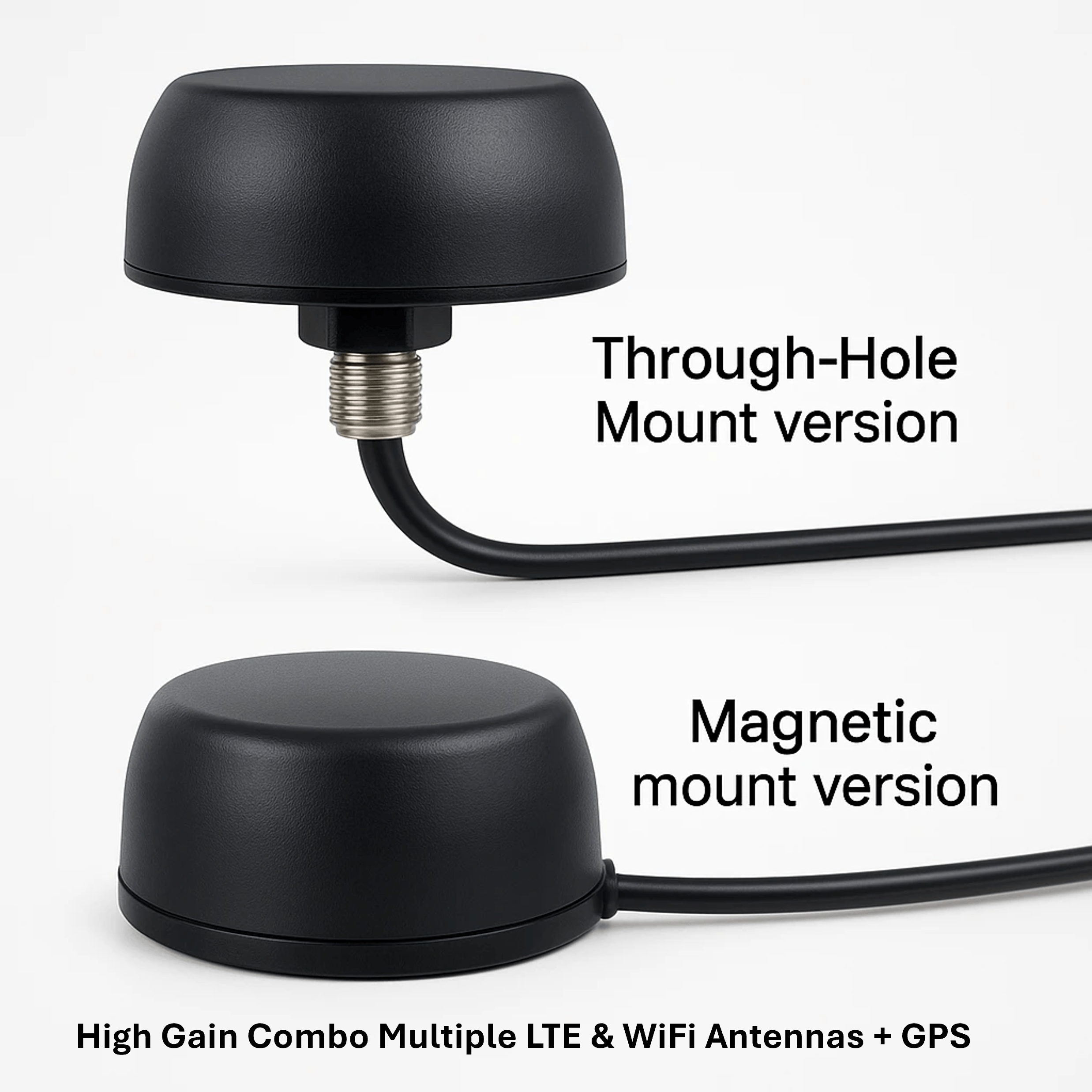
What an LTE antenna has to cover
Unlike a Wi-Fi antenna that only has to cover the 2.4 and 5 GHz ISM bands, an LTE antenna has to span a much wider slice of spectrum because carriers aggregate many bands. In North America and Europe the practical coverage you want is a wideband antenna that handles the whole cellular range rather than a single band:
- Low bands (698–960 MHz): LTE Bands 5, 8, 12, 13, 17, 20, 71 — long reach and good building penetration.
- Mid bands (1710–2170 MHz): Bands 1, 2, 3, 4 — the capacity workhorses.
- High/mid bands (2300–2700 MHz): Bands 7, 38, 40, 41 — more bandwidth, shorter reach.
- 5G sub-6 (3.3–3.8 GHz): n77/n78 — only if your modem and carrier use it; many LTE-rated antennas roll off here.
Always confirm which bands your carrier and modem use before buying. A "4G LTE antenna" rated only to 2700 MHz will not help a 5G n78 (3.5 GHz) connection — verify the upper frequency on the datasheet rather than assuming.
How to choose an LTE antenna: the signal path
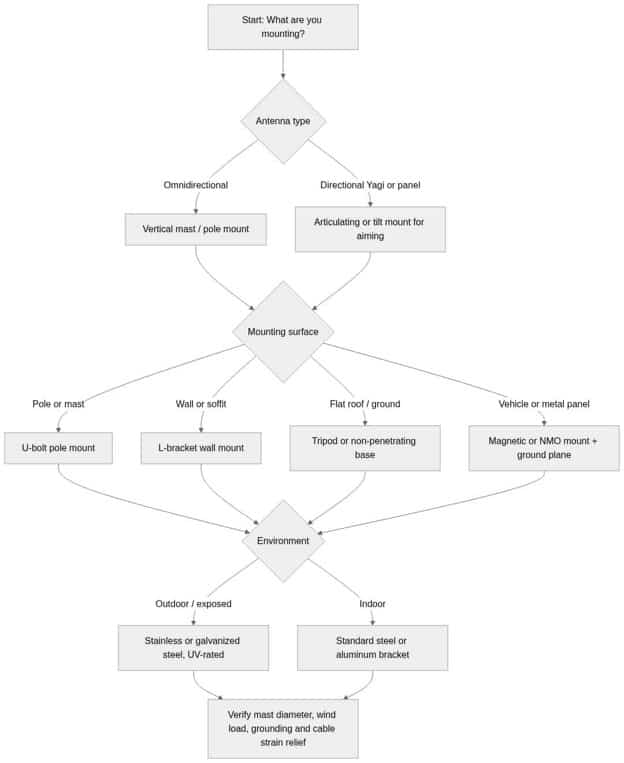
The antenna is one link in a chain that runs from the modem's connector, through an adapter pigtail and feedline, to the antenna at height. Weakness anywhere in that chain limits the whole system. The flow below shows the decision points.
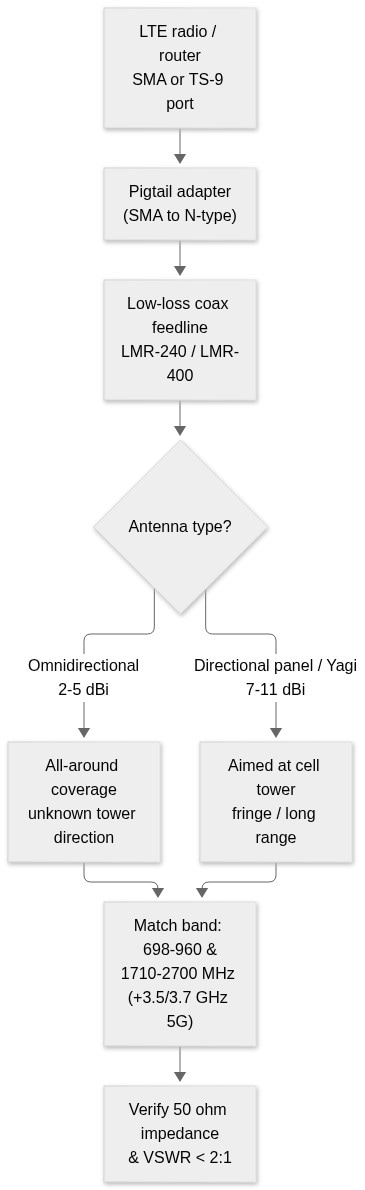
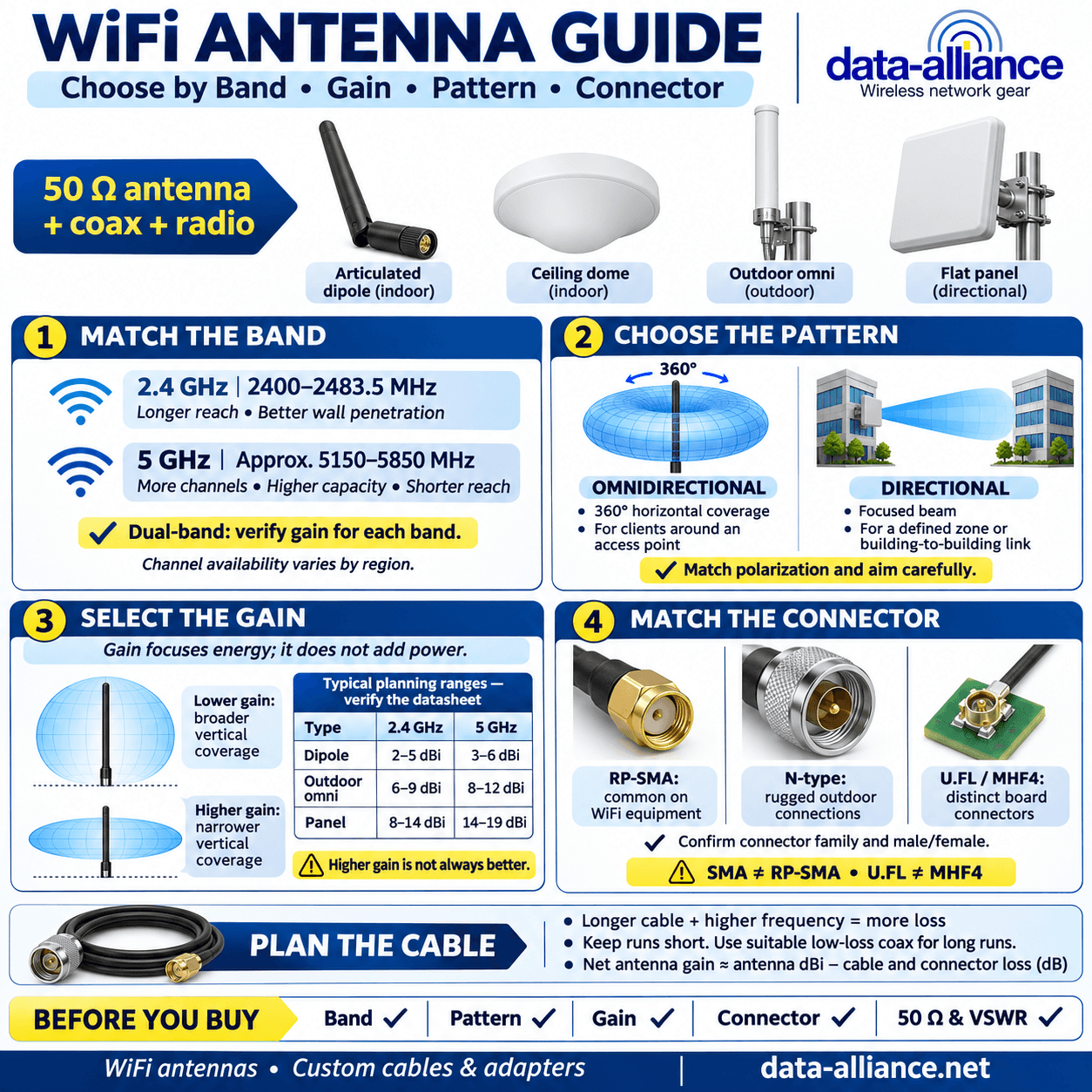
1. Radiation pattern: omni vs directional
This is the first real decision and it depends on whether you know where your serving tower is.
- Omnidirectional (typically 2–5 dBi): radiates 360° in the horizontal plane. Use it when the tower direction is unknown, when you want to stay connected to multiple towers, or on vehicles. Lower gain, easier aiming (none required).
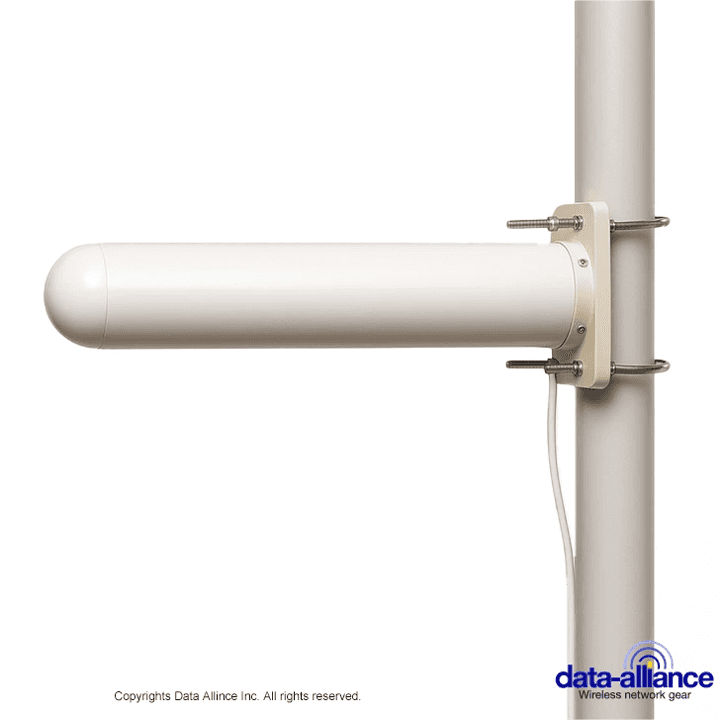
- Directional panel or Yagi (typically 7–11 dBi, sometimes higher): concentrates energy toward one tower. Use it for fringe/long-range sites where you need every dB and the tower bearing is known. Requires aiming and a clear line of sight toward the tower.
Treat vendor gain figures as band-dependent. A wideband LTE antenna rarely holds the same gain across 700 MHz and 2600 MHz — check the datasheet's gain-vs-frequency table rather than trusting a single headline number.
2. Gain in dBi — and why more is not always better
Higher gain narrows the beam. For a directional antenna that is the point. But a very high-gain omni squashes the vertical beamwidth, which can actually hurt if the tower is above or below the horizon (hilltops, valleys, high-rise rooftops). MIMO LTE routers also want two antennas with some spatial or polarization diversity, so two modest antennas often beat one high-gain antenna. For understanding how gain, pattern and impedance interact, our guide to VSWR and impedance matching in antennas is worth reading before you commit.
3. Connector and impedance
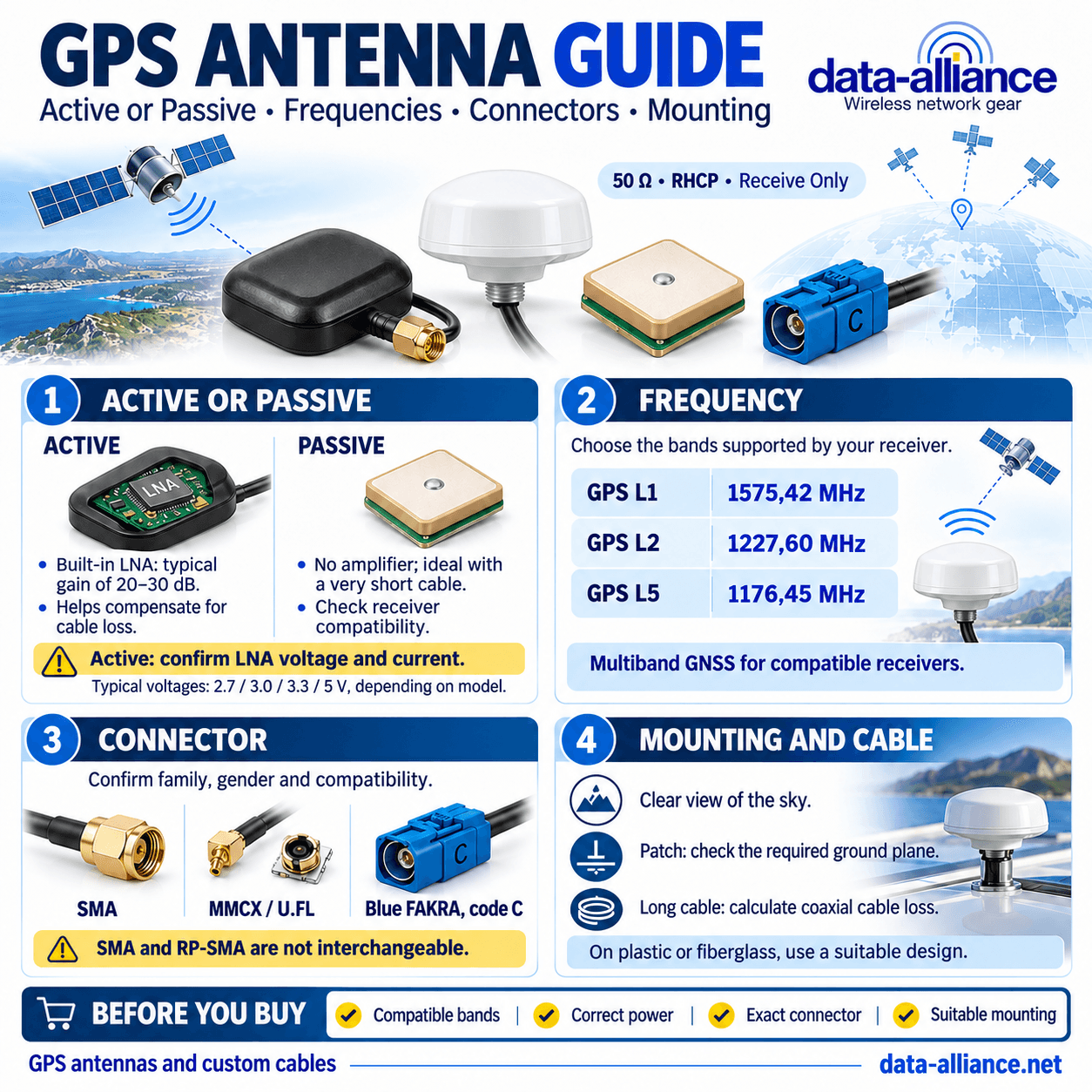
LTE systems are 50-ohm. Match that end to end. The connector you need depends on the device:
- TS-9 and MHF/U.FL — common on USB modems and compact hotspots.
- SMA (standard polarity) — common on LTE routers and many external antennas. Do not confuse with the reverse-polarity RP-SMA used on Wi-Fi gear.
- N-type — rugged and weatherproof for outdoor antennas and longer runs.
Most installs need a pigtail/adapter to go from the router port (often SMA or TS-9) to the antenna connector (often N-type on outdoor units). We manufacture these to length — browse antenna cables & adapters or request a custom quote for a specific connector pair and length.
4. Feedline loss
Coax loss rises with frequency, so the LTE mid bands pay a bigger penalty than the low bands. Keep the run short and use low-loss coax. As a rough comparison of 50-ohm cable families at cellular frequencies:
| Cable | Approx. OD | Relative loss @ ~2 GHz | Typical LTE use |
|---|---|---|---|
| RG-174 | ~2.8 mm | Very high | Short internal jumpers only |
| RG-58 | ~5 mm | High | Short patch leads |
| LMR-240 (equiv.) | ~6.1 mm | Moderate | Medium runs, flexible |
| LMR-400 (equiv.) | ~10.3 mm | Low | Long outdoor runs |
Loss numbers vary by manufacturer and exact frequency, so size the run from the datasheet for your band — do not assume a fixed dB/100 ft. For a deeper spec breakdown see our LMR-400 coax specifications article.
LTE antenna types at a glance
| Type | Typical gain | Pattern | Best for |
|---|---|---|---|
| Whip / blade omni | 2–3 dBi | 360° horizontal | Routers, hotspots, unknown tower direction |
| Fiberglass omni (outdoor) | 3–6 dBi | 360° horizontal | Fixed sites covering multiple towers |
| Panel (directional) | 7–10 dBi | ~60–90° beam | Fringe sites with a known tower bearing |
| Yagi / log-periodic | 9–11+ dBi | Narrow beam | Maximum range, clear line of sight |
| MIMO panel (2x port) | Per-port gain | Dual-polarized | MIMO LTE routers for throughput |
LTE, cellular generations and 5G context
LTE is the 4G air interface; many "5G" consumer connections still fall back to LTE for coverage, and sub-6 5G reuses much of the same antenna spectrum. If you want the background on how LTE sits alongside GSM, WCDMA and 5G, see our overview of cellular wireless technologies from 2G to 6G and the detailed breakdown of 5G, 4G and 3G standards (LTE, GSM, CDMA, WCDMA, HSPA). Those explain the band plans an LTE antenna has to satisfy.
Frequently asked questions
What frequency does an LTE antenna need to cover?
For most North American and European networks, a wideband LTE antenna should cover roughly 698–960 MHz (low bands) and 1710–2700 MHz (mid bands). If your modem and carrier use 5G sub-6, you also need coverage up to about 3.3–3.8 GHz — confirm the upper frequency on the antenna datasheet, because many LTE-only antennas roll off below that.
Omnidirectional or directional LTE antenna — which should I use?
Use an omnidirectional antenna when you do not know where the tower is, want to reach several towers, or are mounting on a vehicle. Use a directional panel or Yagi when the tower bearing is known and you need maximum gain for a fringe or long-range site. Directional antennas must be aimed and ideally have line of sight to the tower.
What connector does my LTE router use?
It varies: USB modems and hotspots often use TS-9 or MHF/U.FL, while LTE routers commonly use SMA (standard polarity, not the RP-SMA found on Wi-Fi gear). Outdoor antennas frequently terminate in N-type. Check your device's port and use the correct 50-ohm pigtail or adapter to bridge to the antenna.
Does my LTE router need one antenna or two?
Most modern LTE routers use MIMO and have two antenna ports. For best throughput, populate both with antennas that have spatial or polarization diversity. Two moderate-gain antennas often outperform a single high-gain antenna on a MIMO radio.
How long can my coax run be?
As short as practical. Coax loss increases with frequency, so the LTE mid bands lose more signal per foot than the low bands. For longer outdoor runs use low-loss cable such as LMR-400-equivalent, and calculate the loss from the datasheet at your operating band rather than assuming a fixed figure.
Spec your LTE antenna with Data Alliance
Match the band, pattern, gain and connector to your radio and site, keep the feedline short and low-loss, and verify 50-ohm impedance with VSWR under 2:1. If you need a specific connector pair or cable length, our custom antenna cables are built to order — browse antenna cables & adapters, add the antenna you need to your cart, or request a custom quote and our technical support team will help you spec the right LTE antenna assembly.