






Antennas, Antenna Cables, Wireless Products: Technical Articles
Top 20 Wireless Technologies Poised for Fast Growth
Table of Contents
Wireless Technologies Poised for Growth in 2025–2026
These twenty tech wireless sectors will experience the most significant growth in the coming years - they are the top twenty wireless technologies that business leaders plan to invest in, in 2025 and 2026.
Global wireless data traffic continues to grow exponentially, driven by cloud computing, AI workloads, IoT expansion, industrial automation, and consumer demand for seamless connectivity. As spectrum efficiency, latency reduction, and energy optimization become strategic priorities, these wireless technologies represent high-impact investment opportunities.

Top 20
1. 5G Networks.
5G networks have already started to revolutionize the world of telecommunications, providing ultra-fast and low-latency connections. As 5G continues to expand globally, investments in its infrastructure and supporting technologies will remain a priority. However, research into 6G and beyond has already begun, aiming to provide even faster and more efficient wireless networks.
The evolution toward 5G-Advanced (3GPP Release 18) is introducing enhanced uplink performance, improved massive MIMO, AI-native air interfaces, and expanded support for industrial automation and XR applications. This transition phase bridges current 5G deployments with early 6G research initiatives.
2. Wi-Fi6 and Wi-Fi 6E.
Wi-Fi 6 (802.11ax) and its extended version, Wi-Fi 6E, are the latest standards in wireless networking. These technologies deliver faster speeds, increased capacity, and reduced latency, making them ideal for high-density environments such as offices, stadiums, and public spaces. Investments in Wi-Fi 6 and Wi-Fi 6E infrastructure will be crucial to support the growing number of connected devices.
Wi-Fi 7 (802.11be) is now emerging, delivering multi-link operation (MLO), 320 MHz channels, and ultra-low latency performance. Enterprises upgrading infrastructure today are increasingly evaluating Wi-Fi 7 for high-density, high-throughput deployments.

3. The Internet of Things (IoT).
The Internet of Things (IoT) has experienced rapid growth over the years, and the trend is expected to continue. As a result, various IoT connectivity solutions have emerged, such as Low-Power Wide-Area Networks (LPWAN), Narrowband IoT (NB-IoT), and Long Range (LoRa). These technologies enable long-range, low-power, and cost-effective solutions for connecting a vast array of IoT devices.
The convergence of IoT with edge AI is accelerating the development of intelligent endpoints capable of local decision-making, predictive maintenance, and autonomous system optimization.
4. Private LTE and 5G Networks.
Private LTE and 5G networks provide dedicated and secure wireless connectivity for enterprises, industrial facilities, and critical infrastructure. These networks offer enhanced reliability, low latency, and support for a large number of devices, making them an attractive investment for businesses looking to optimize their operations.
The availability of CBRS spectrum in the United States and shared-spectrum models globally has significantly lowered the barrier to entry for private 5G deployment in manufacturing, logistics, mining, and energy sectors.
5. V2X Technology.
V2X technology enables communication between vehicles and their surroundings, including other vehicles, infrastructure, and pedestrians. As autonomous vehicles and smart cities become more prevalent, V2X will play a vital role in ensuring road safety and efficient traffic management. Investments in V2X infrastructure and applications will be essential to support this growing ecosystem.
6. Wireless Power Transfer Technologies.
Wireless power transfer technologies, such as inductive charging and resonant coupling, are gaining traction for charging electric vehicles, smartphones, and other devices. As the demand for wire-free charging solutions increases, investments in wireless power transfer technology will continue to grow.
7. Millimeter wave (mmWave) Technologies.
Millimeter wave (mmWave) technologies are a key component of 5G networks, offering high-speed data transmission and ultra-low latency. However, mmWave has potential applications beyond telecommunications, such as radar systems, high-speed data links, and imaging. Investment in mmWave technologies will drive innovation and new use cases across various industries.
8. LEO Satellite Broadband Constellations (Starlink, Kuiper, OneWeb).
The expansion of satellite communication networks, such as SpaceX's Starlink and Amazon's Project Kuiper, has renewed interest in satellite-based connectivity solutions. These networks aim to provide global high-speed internet coverage, even in remote and underserved areas. Investments in satellite communications will be crucial to bridging the digital divide.
9. AI technologies.
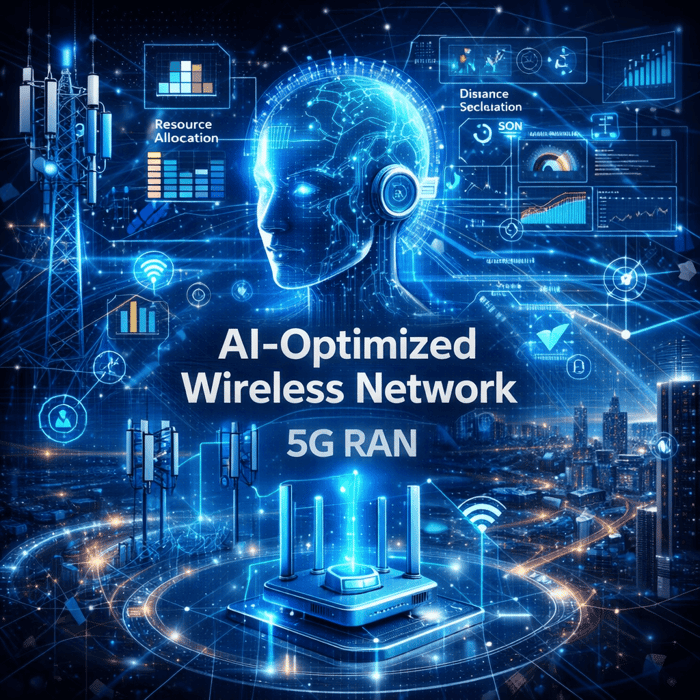
Artificial intelligence and machine learning are becoming increasingly important in optimizing wireless networks. AI-enabled solutions can predict network congestion, allocate resources efficiently, and improve overall performance. As AI technologies evolve, investments in AI-enhanced wireless networks will provide significant benefits to users and network operators.
AI is increasingly embedded directly into the RAN (Radio Access Network), enabling self-optimizing networks (SON), predictive maintenance, automated beam management, and dynamic spectrum allocation.
10. Edge Computing.
Edge computing brings data processing closer to the source, reducing latency and improving performance in real-time applications. As IoT devices and 5G networks continue to proliferate, edge computing will become increasingly important for handling the massive amounts of data generated. Investments in edge computing infrastructure and solutions will support the continued growth of wireless technologies.
Multi-access Edge Computing (MEC) is becoming critical for latency-sensitive applications such as autonomous vehicles, AR/VR, smart factories, and real-time analytics.
11. Bluetooth 5.2 and LE Audio.
Bluetooth 5.2 is the latest iteration of Bluetooth technology, which is an essential method of short-range wireless communication between devices. LE Audio is an enhancement to Bluetooth Low Energy and introduces new features such as high-quality audio streaming, broadcast audio sharing, and improved hearing aid support. With the growing demand for wireless audio devices, Bluetooth 5.2 and LE Audio are expected to flourish in the coming years.
12. Zigbee and Thread.
Zigbee and Thread are low-power, mesh networking protocols designed for IoT devices. They enable smart devices to communicate with each other, creating a network of connected devices for home automation, industrial applications, and more. Zigbee and Thread offer secure, reliable, and scalable networking solutions, making them crucial technologies for the future of IoT.
13. Ultra-Wideband (UWB)
Ultra-Wideband is a short-range wireless communication technology that provides precise location and positioning capabilities. UWB operates in a wide frequency range, offering high data rates, low power consumption, and high accuracy for positioning. Applications include indoor positioning systems, secure keyless entry, and device-to- device communication. The growing demand for precise positioning technology is likely to drive UWB's adoption in various industries.
14. Wireless HDMI and Display Technologies
Wireless HDMI and display technologies enable the transmission of high-definition audio and video signals without cables. These technologies, such as WiGig and WirelessHD, allow users to create clutter-free workspaces and home entertainment systems. As the demand for wireless and streamlined setups increases, these technologies will likely see continued growth and development.
15. Near Field Communication (NFC).
NFC is a short-range wireless communication technology that allows devices to exchange data by simply being in close proximity to each other. NFC has been widely adopted for contactless payments, access control, and information sharing applications. With the growing popularity of contactless transactions and IoT devices, NFC is expected to remain an essential wireless technology.
16. Enterprise & Government SATCOM.
Satellite communication enables the transmission of data, voice, and video signals across long distances using satellites as signal relay points. SATCOM provides global coverage, making it ideal for remote and underserved areas. The demand for reliable and uninterrupted communication solutions has driven the growth of SATCOM technology in various sectors, including defense, maritime, and aviation.
17. WirelessHART.
WirelessHART is a wireless industrial communication protocol specifically designed for process automation and control systems. It offers a secure, reliable, and low-power wireless mesh network for transmitting data between sensors, actuators, and control systems. With the increasing need for real-time data monitoring and control in industrial environments, WirelessHART is expected to see significant growth.
18. Cellular IoT (LTE-M and NB-IoT).
Cellular IoT technologies, such as LTE-M and NB-IoT, provide low-power, wide-area network connectivity for IoT devices. These technologies offer extended coverage, low power consumption, and support for a massive number of devices. As the IoT market continues to expand, Cellular IoT technologies will play a crucial role in connecting and managing IoT devices.
19] Beamforming Technology:
Beamforming is a wireless communication technique that focuses the transmission of signals in a specific direction, enabling higher throughput, improved signal quality, and reduced interference. Beamforming is already being used in Wi-Fi and 5G technologies and is expected to be a key component of future wireless communication systems.
20. Cognitive Radio (CR).
Cognitive Radio is an adaptive and intelligent radio technology that can automatically detect available channels in the wireless spectrum and change transmission parameters to optimize communication. CR has the potential to improve spectrum utilization, reduce interference, and enhance the performance of wireless systems. As the demand for efficient spectrum usage increases, Cognitive Radio is expected to gain traction in the wireless communication industry.
Open RAN (O-RAN). Open Radio Access Network architectures disaggregate hardware and software, enabling vendor interoperability, cost efficiency, and accelerated innovation. Governments and telecom operators worldwide are investing heavily in Open RAN to reduce dependency on traditional infrastructure vendors.
Summary. Top 20 Wireless Technologies Poised for Growth (2025–2026)
# | Technology | Core Focus | Key Growth Drivers | Primary Applications |
1 | 5G Networks / 5G-Advanced | Ultra-fast, low-latency connectivity | Massive MIMO, AI-native RAN, XR support, path to 6G | Telecom, industrial automation, smart cities |
2 | Wi-Fi 6 / 6E / Wi-Fi 7 | High-density wireless networking | Multi-Link Operation (MLO), 320 MHz channels, ultra-low latency | Enterprises, stadiums, public spaces |
3 | Internet of Things (IoT) | Large-scale device connectivity | LPWAN, NB-IoT, LoRa, Edge AI convergence | Smart cities, industrial IoT, agriculture |
4 | Private LTE & Private 5G | Dedicated enterprise networks | CBRS spectrum, secure low-latency operations | Manufacturing, logistics, mining, energy |
5 | V2X Technology | Vehicle-to-everything communication | Autonomous driving, smart infrastructure | Transportation, smart cities |
6 | Wireless Power Transfer | Cable-free energy delivery | EV charging demand, mobile device charging | EVs, consumer electronics |
7 | mmWave Technologies | High-frequency high-speed transmission | 5G expansion, radar, imaging innovation | Telecom, defense, automotive radar |
8 | LEO Satellite Broadband | Global broadband coverage | Starlink, Kuiper, rural connectivity demand | Remote internet, maritime, aviation |
9 | AI in Wireless Networks | Network optimization & automation | Self-optimizing networks (SON), AI-RAN, dynamic spectrum allocation | Telecom operators, enterprise networks |
10 | Edge Computing / MEC | Low-latency local data processing | Real-time analytics, autonomous systems | Smart factories, AR/VR, IoT |
11 | Bluetooth 5.2 & LE Audio | Short-range wireless audio | Broadcast audio, hearing aid support | Consumer electronics, wearables |
12 | Zigbee & Thread | Low-power mesh networking | Secure scalable IoT networks | Smart homes, building automation |
13 | Ultra-Wideband (UWB) | Precise positioning & short-range data | High-accuracy indoor location demand | Secure access, asset tracking |
14 | Wireless HDMI / Display | Cable-free HD video transmission | Clean workspace & entertainment setups | Home entertainment, enterprise AV |
15 | Near Field Communication (NFC) | Contactless data exchange | Digital payments, access control growth | Fintech, IoT, mobile devices |
16 | Enterprise & Government SATCOM | Long-distance satellite communications | Defense, aviation, maritime expansion | Military, aerospace, maritime |
17 | WirelessHART | Industrial wireless automation | Secure real-time process monitoring | Oil & gas, chemical plants |
18 | Cellular IoT (LTE-M, NB-IoT) | Low-power wide-area cellular IoT | Massive device deployment | Smart meters, asset tracking |
19 | Beamforming Technology | Directional signal optimization | Higher throughput, interference reduction | Wi-Fi 7, 5G networks |
20 | Cognitive Radio (CR) | Adaptive spectrum utilization | Spectrum scarcity, efficiency demands | Defense, telecom optimization |
— | Open RAN (O-RAN) | Disaggregated radio access architecture | Vendor interoperability, cost reduction | Telecom infrastructure |
Conclusion:
Wireless technologies continue to redefine global connectivity across consumer, enterprise, industrial, and government sectors. From 5G-Advanced and private networks to AI-driven optimization, satellite broadband, and intelligent IoT ecosystems, the wireless landscape is entering a new phase of acceleration. Organizations that strategically invest in these emerging technologies in 2025 and 2026 will position themselves at the forefront of digital transformation, operational efficiency, and competitive advantage.
FAQs
Which wireless technologies will see the most growth in 2025–2026?
The strongest growth is expected in 5G-Advanced, Wi-Fi 6/6E and Wi-Fi 7, Private 5G, AI-optimized networks, IoT connectivity (LTE-M, NB-IoT, LoRa), LEO satellite broadband, Edge Computing, and Open RAN. These technologies support increasing data demand, automation, and AI-driven infrastructure.
How is 5G-Advanced different from standard 5G?
5G-Advanced (3GPP Release 18) enhances uplink performance, massive MIMO, AI-native air interfaces, and industrial support. It acts as a bridge between current 5G deployments and early 6G research, improving efficiency, automation, and XR capabilities.
Why are private 5G networks gaining momentum?
Private LTE and 5G networks provide secure, low-latency, high-reliability connectivity for enterprises and industrial facilities. The availability of CBRS spectrum and shared-spectrum models has reduced deployment barriers, accelerating adoption in manufacturing, logistics, energy, and mining.
What role does AI play in wireless networks?
AI is increasingly embedded directly into the Radio Access Network (RAN). It enables self-optimizing networks (SON), predictive maintenance, automated beamforming, dynamic spectrum allocation, and real-time congestion management — improving efficiency and lowering operational costs.
How are satellite networks influencing global connectivity?
LEO satellite constellations such as Starlink, Kuiper, and OneWeb are expanding high-speed broadband access worldwide, particularly in remote and underserved regions. Enterprise and government SATCOM also continue to grow in defense, maritime, and aviation sectors.
Why is Open RAN considered a major investment trend?
Open RAN (O-RAN) disaggregates hardware and software in radio networks, enabling vendor interoperability, cost efficiency, and faster innovation. Governments and telecom operators are investing in Open RAN to reduce dependency on traditional vendors and create more flexible network architectures.