



Antennas, Antenna Cables, Wireless Products: Technical Articles
Grounding of Antenna Cables: Gear Protection and Performance
Table of Contents
Grounding antenna cables is one of the most overlooked yet critical steps in any antenna installation. Whether you are deploying antennas for WiFi, cellular, radio, TV, or satellite systems, improper grounding can lead to equipment failure, degraded performance, or serious safety hazards.
The Importance of Grounding Antenna Cables
Proper grounding of antenna cables is not just a matter of equipment and personnel safety from lightning strikes and power surges; it also contributes to the overall performance of the antenna. When it comes to the installation of antenna systems for both radio, television, satellite, and other telecommunications applications, the grounding of antenna cables is essential.
Later in this article, we discuss the principal causes, and the potential damages to equipment and premises.
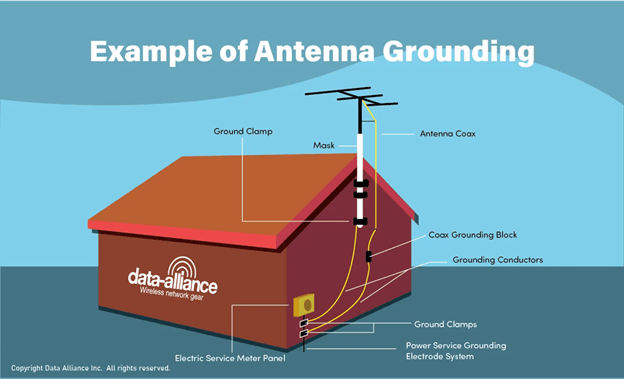
Grounding in any Antenna setup has two major purposes
- Protection against electrical surges: During an electrical storm, an ungrounded antenna can spell disaster and can further lead to massive damage to the associated equipment and life-threatening conditions for humans surrounding it.
- Enhanced signal quality: Grounding helps to reduce the levels of noise and interference in the signal the antenna receives, which is important in ensuring clear communications.
How Proper Grounding Improves Antenna Performance
In addition to safety, proper grounding improves RF system stability by reducing unwanted electrical noise, static buildup, and common-mode currents on coaxial cables. These effects can degrade signal-to-noise ratio (SNR), introduce interference, and reduce overall link reliability—especially in long coax runs and outdoor installations.
Connecting Antenna to Ground Rod Using Ground Wire for Grounding the Antenna Cables
- Ground Wire: A ground wire is used to connect the antenna and its mounting structure to a grounding rod. This wire should be as direct and straight as possible to provide an effective path for the electrical discharge to reach the earth.
- Typical sizes: #6 AWG or larger copper wire (depending on local code)
- Prefer solid copper or tinned copper for corrosion resistance
- Grounding Rod: This rod is driven into the ground to reach a depth that ensures contact with the soil. This depth depends on local soil conditions and regulations but is usually around eight feet to ensure a good earth ground.
- Copper-clad steel rods are preferred
- Multiple rods may be required in rocky or high-resistance soil
- Bonding All Components: It’s essential that all metallic components of the antenna system, including the mast and coaxial cable, are bonded together and connected to the same grounding system. This ensures that all parts have an equal potential, reducing the chance of electrical arcing.
- Surge Protectors: Surge protectors can be installed along the coaxial cable to protect the interior equipment from surges. These devices divert excess voltage from the cable to the ground, thereby protecting connected devices like TVs and radios.
Proper Grounding Techniques:
- Use Thick, Low-Resistance Wires: For the grounding wires, you should use thicker cables that have low resistance and can handle greater amounts of current.
- Regular Inspection: The grounding systems should be inspected regularly, especially in high-lightning areas or where metallic parts may get corroded due to environmental influences, such as salty sea spray.
- Compliance with Local Codes: Geographic and environmental conditions may require certain grounding practices as per local building codes and standards.
Proper Grounding Benefits:
- Ensure a Safe System: Proper grounding practice will keep your system safe and lower the risk of electric shock hazards and lightning-induced fires.
- Protection of Equipment: Grounding prevents damage to radio equipment connected to the antenna, like receivers and transmitters, by safely leading excess electrical energy into the earth.
- Better Performance in Systems: Well-grounded systems reduce electrical disturbances, resulting in higher quality image and sound for broadcasts and high-quality, error-free signals for communication purposes.
Common Grounding Mistakes to Avoid
- Grounding only the mast but not the coax shield
- Using long, coiled ground wires instead of short, straight runs
- Installing lightning arrestors without bonding them to the same ground system
- Mixing multiple ground points without proper bonding
- Ignoring corrosion in coastal or high-humidity environments
Grounding Standards and Electrical Codes
Antenna grounding should always comply with applicable electrical and safety standards, such as:
- NEC Article 810 & 820 (USA)
- IEC 62305 (International lightning protection)
- Local building and electrical codes
Following these standards ensures both safety and insurance compliance.
Electrical surges in antenna cables that can damage associated equipment are caused by the following events of nature:
- Lightning Strikes: This is the most common and potentially the most destructive cause of electrical surges in antenna systems. Lightning does not need to strike the antenna directly; a nearby strike can also induce a high-voltage surge in the cable, which can damage connected equipment.
- Electrostatic Discharge: Changes in the weather, such as wind that moves dust or snow, can cause the buildup of static electricity on an antenna. This accumulated charge can suddenly discharge into connected equipment, causing a surge.
- Solar Flares: While less common, solar flares can cause geomagnetic storms that induce currents in long conductors, including antenna cables. These induced currents can be strong enough to cause damage to electronic components and disrupt electrical systems.
When lightning strikes near an antenna or its cable
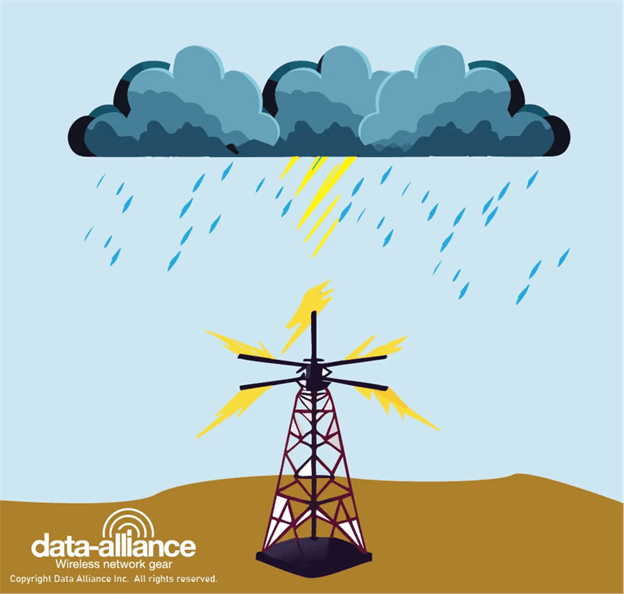
Several things can occur, which may lead to damage to the antenna, the cable, and any associated gear:
- Direct Strike: If the lightning directly hits the antenna, the immense current of the lightning can melt or vaporize parts of the antenna. This can also lead to the destruction of the antenna mount and any devices directly connected to it.
- Induced Voltages: Even if the lightning strikes nearby and not directly on the antenna, it can induce voltages in the antenna and its cable. These induced voltages can be very high, enough to overcome the insulation properties of typical antenna cables, potentially leading to short circuits or arcs.
- Surge Propagation: The high voltage from a strike can travel along the antenna cable and into connected equipment. This can include radios, amplifiers, or other sensitive electronics, which can be severely damaged by the sudden surge of power.
- Electromagnetic Pulse (EMP): Lightning emits a broad spectrum of electromagnetic energy, which can create transient electromagnetic fields strong enough to induce currents in nearby conductive materials, further risking damage to electronic components.
- Ground Currents: If a lightning bolt strikes the ground nearby, the current can travel through the ground. If the antenna system isn't properly grounded, or if the ground currents travel along the path of the antenna's grounding system, this can also lead to damages.
Proper grounding, surge protection, and the use of lightning arrestors can safely divert the excess energy away from sensitive components, protecting the equipment from most lightning-related damage.
Wrap-Up
Proper grounding of antenna cables, and the use of lightning arrestors, is not only advisable or a good practice—it is mandatory in any antenna installation to achieve safety, protect equipment, and ensure signal quality. Installing a grounding wire, grounding rod, bonding all components, and using surge protectors will protect your antenna system and enhance its performance. If antenna installers comply with local laws and regulations and follow best installation practices, you can rest assured your antenna system operates safely and effectively. When designed and installed correctly, grounding is not an optional upgrade—it is a foundational requirement for any reliable and professional antenna system.
FAQs
Why is grounding antenna cables so important?
Grounding protects people and equipment from lightning and power surges, and it also improves antenna performance by reducing noise, interference, and instability in RF systems.
Does grounding actually improve signal quality or is it only for safety?
It helps with both. Beyond safety, grounding reduces static buildup and common-mode currents on coax cables, which can improve signal-to-noise ratio (SNR) and overall link reliability—especially outdoors and on long cable runs.
What parts of an antenna system should be bonded and grounded?
All metallic components should be bonded together and tied into the same grounding system, including the antenna, mast, mounting hardware, and the coax shield. This reduces electrical arcing and keeps everything at the same potential.
What grounding wire and ground rod are typically recommended?
A direct, straight ground wire is recommended—often #6 AWG copper or larger depending on local code. Ground rods are typically copper-clad steel and are commonly driven about 8 feet into the earth, though soil conditions may require multiple rods.
Where do surge protectors and lightning arrestors fit into the setup?
They’re installed inline on the coax to divert excess voltage safely to ground before it reaches indoor equipment. However, they only work properly if they’re bonded to the same grounding system as the rest of the installation.
What are the most common grounding mistakes to avoid?
Common issues include grounding only the mast (not the coax shield), using long/coiled ground wires, failing to bond arrestors to the same ground system, creating multiple unbonded ground points, and ignoring corrosion in coastal or humid environments.