



Antennas, Antenna Cables, Wireless Products: Technical Articles
SAW filters for GPS Antennas - Surface Acoustic Wave
Table of Contents
SAW Filters for GPS Antennas:
SAW filters are a critical component in the RF front end of GPS and GNSS devices. They enable receivers to maintain high sensitivity while preserving selectivity by rejecting unwanted signals and interference. This article explains what SAW filters are and how they improve GPS performance in real-world deployments.
Data Alliance GPS antennas—including active GPS antennas and GPS combo / combination antennas (GPS + LTE and/or WiFi)—integrate SAW filters to ensure reliable operation in high-interference environments typical of IoT, fleet, and industrial applications.
What is a SAW filter?
Surface Acoustic Wave (SAW) filters are specialized RF devices designed to selectively pass or reject signals at specific frequencies. In GPS applications, they are tuned to the L1 band (1575.42 MHz).
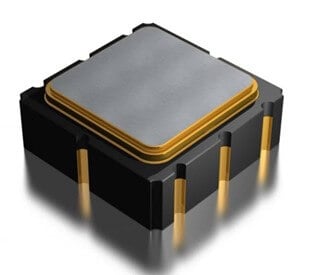 SAW Filter
SAW filters operate by converting electrical RF energy into mechanical (acoustic) waves using piezoelectric materials such as quartz, lithium niobate (LiNbO₃), or lithium tantalate (LiTaO₃). This conversion occurs through an Interdigital Transducer (IDT), which consists of precisely spaced electrodes.
The generated surface acoustic waves propagate across the substrate and are then converted back into electrical signals. This process inherently filters frequencies based on the physical design of the device.
SAW filters are compact, cost-effective, and widely used in RF systems up to ~3 GHz. However, filter selectivity and center frequency can shift with temperature. Non-temperature-compensated designs may drift slightly, which is an important consideration in outdoor or industrial deployments.
SAW filters for GPS devices and applications:
In GPS systems, SAW filters are used to isolate the desired satellite signal from interference sources such as cellular transmissions, harmonics, and broadband RF noise.
Typical GPS SAW filters:
- Center frequency: 1575.42 MHz (L1)
- Bandwidth: ~20 MHz (1565–1585 MHz)
- Rejection:
- ~10 dB at 1525 MHz
- ~22 dB at 1625 MHz
- Insertion loss: ~0.9 dB
- Return loss: ~14 dB
These filters are typically implemented as compact SMT components and are integrated into active antenna designs or receiver front ends.
Why filtering is essential in GPS systems:
GNSS receivers already use digital signal processing to extract satellite signals. However, RF interference directly impacts performance before signal processing begins.
Interference sources include:
- LTE/4G/5G transmitters near GPS band edges
- Co-located radios in combo devices (WiFi, cellular)
- Harmonics and spurious emissions
- Urban RF noise environments
This interference can:
- Increase Time To First Fix (TTFF)
- Reduce positional accuracy
- Cause intermittent signal loss
SAW filters improve signal integrity by removing out-of-band energy before it reaches sensitive RF stages.
GPS receivers require specificity as well as sensitivity.
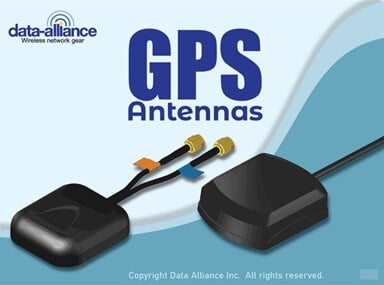
GPS receivers have to be sensitive because the GPS signal suffers significant attenuation as it travels to earth. Low Noise Amplifiers (LNAs) are routinely used with GPS receivers to increase signal reception.
However, this makes the receivers vulnerable to the effects of electromagnetic interference from a variety of sources which can impair the device’s ability to lock onto a clear signal. Multimode devices which have numerous wireless technologies operating simultaneously may experience jamming and coupling from cellular signals can also be disruptive.
A SAW filter, placed in front of the LNA helps protect against the effects of such noise as it will be efficiently filtered and rejected. GPS SAW filters make a GPS system more reliable, especially where interference is regularly encountered. In urban areas, or where a GPS antenna is located close to transmitting antennas they are especially advantageous. They require competent installation to ensure that only the center frequency is allowed through.
Managing insertion losses from SAW filters.
The weakness of GPS signals means that insertion loss from the inclusion of a SAW filter on the receiver’s RF line can be significant. The decision to include a SAW filter must balance these receiver chain insertion losses against the rejection of out-of-band signals that can be achieved.
The type of SAW filter used may affect insertion losses.
- SAW filters with Interdigital Transducers (IDTs) have electrodes that project perpendicular to the direction of propagation of the surface acoustic wave. This geometric arrangement is known to limit the performance of the filter, particularly by limiting its maximum bandwidth. The number of finger electrode pairs in an IDT has an inverse relationship with the fractional bandwidth of the filters. Larger bandwidth filters will have few IDT fingers but this leads to the generation of bulk waves and a significant rise in filter insertion loss.
- Slanted Finger Interdigital Transducer (SFIT) filters are a type of SAW filter used in GPS applications that have lower insertion loss compare to the convention IDT design. They have a greater density of electrodes, due to their slanted orientation, meaning that they can also achieve a small shape factor.
The type of piezoelectric material and its preparation can also affect the insertion losses of a SAW filter.
The position of a SAW filter in the receiver line also affects performance.
SAW filters are typically used in series with an LNA. Positioning the filter before the LNA input can prevent the LNA from becoming saturated with high-power jamming signals and enhance its selectivity for the target frequency. GPS filters can also be positioned after the LNA to suppress EMI and unwanted signals that may couple to the line.
Superior protection for mission-critical GPS applications
SAW filters provide robust protection in demanding environments where GPS reliability is essential, including:
- Fleet tracking systems
- Industrial IoT devices
- Emergency response equipment
- Co-located multi-radio systems
Compared to ceramic or LC filters, SAW filters offer:
- Better selectivity
- Smaller size
- Improved consistency
Installation and deployment considerations:
For optimal performance:
- Use quality coaxial cables with low loss
- Maintain proper impedance matching (50 ohm)
- Avoid placing GPS antennas near high-power transmit antennas
- Ensure correct grounding in vehicle or industrial installs
Improper installation can negate the benefits of SAW filtering.
Conclusion:
SAW filters are a fundamental component in modern GPS and GNSS antenna systems. By rejecting interference while preserving weak satellite signals, they significantly improve reliability, accuracy, and time to first fix.
Although they introduce some insertion loss, their role in protecting sensitive RF front ends—especially in active and multi-band antenna systems—makes them essential for real-world deployments.
Data Alliance integrates SAW filtering into its GPS antenna solutions to ensure dependable performance in challenging RF environments.
FAQs
What is a SAW filter and how does it work?
A Surface Acoustic Wave (SAW) filter is an electronic device that filters radio frequency (RF) signals by converting them into acoustic energy using piezoelectric materials such as quartz or lithium niobate. It then reconverts the energy into electrical form, allowing only specific frequencies to pass while blocking unwanted signals.
Why are SAW filters important for GPS antennas?
GPS signals are very weak when they reach Earth and can be easily disrupted by interference. SAW filters help ensure GPS receivers remain both sensitive and selective by filtering out unwanted frequencies, improving accuracy, and reducing delays in acquiring a GPS fix.
What frequency range do GPS SAW filters typically cover?
Most GPS SAW filters are designed for the L1 frequency band at 1575 MHz, with a typical bandwidth of around 20 MHz (1565–1585 MHz). They allow the desired GPS signals to pass while rejecting interfering signals outside this range.
Do SAW filters affect GPS signal strength?
Yes, SAW filters can introduce insertion loss, which slightly weakens the GPS signal. However, the benefits of rejecting strong out-of-band interference usually outweigh the small signal reduction. Advanced designs, such as Slanted Finger Interdigital Transducer (SFIT) filters, help minimize insertion losses.
Where should a SAW filter be positioned in a GPS receiver?
A SAW filter is typically placed before the Low Noise Amplifier (LNA) to prevent strong interfering signals from saturating the amplifier. It can also be placed after the LNA to further reduce electromagnetic interference (EMI).
How do environmental conditions affect SAW filter performance?
Temperature changes can shift the center frequency of SAW filters. Non-temperature-compensated filters may increase frequency at lower temperatures and decrease at higher ones, which can affect precision in certain conditions.
In what situations are GPS SAW filters especially beneficial?
They are particularly valuable in urban areas, near transmitting antennas, and in multimode devices that combine GPS with LTE, WiFi, or other wireless technologies. In mission-critical applications, such as emergency services, SAW filters greatly improve GPS reliability and signal clarity.