


Antennas, Antenna Cables, Wireless Products: Technical Articles
LTE 5G 4G 3G GSM Multi-Band Cellular Antennas
Table of Contents
LTE, 5G, 4G, 3G, and GSM Multi-Band Cellular Antennas
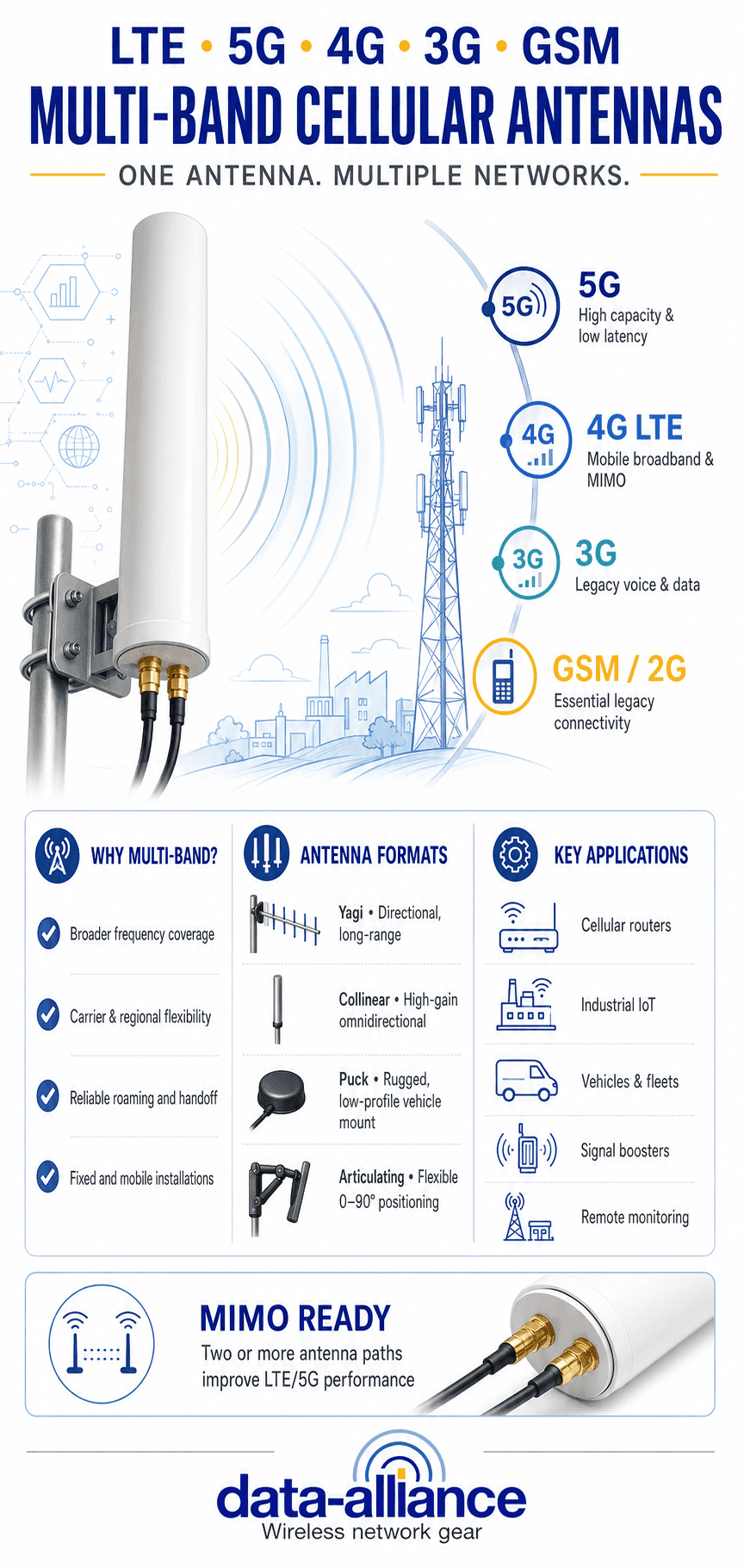
Multi-band cellular antennas allow routers, modems, IoT gateways, and mobile systems to communicate across multiple frequency bands. They provide a versatile solution for fixed and mobile installations that must operate with different carriers, technologies, or geographic regions.
Cellular networks have changed substantially in recent years. Major U.S. carriers discontinued their 3G networks in 2022, Sprint was integrated into T-Mobile, and the remaining GSM 2G infrastructure is being retired. Antenna selection should now focus primarily on the 4G LTE and 5G NR bands supported by the connected modem.
What Is a Multi-Band Cellular Antenna?
A multi-band cellular antenna is designed to transmit and receive signals across several frequency ranges. Depending on its design, it may cover low bands such as 600, 700, 800, and 900 MHz; mid bands from approximately 1.7 to 2.7 GHz; and selected 5G bands extending to 6 GHz or higher.
This broad coverage allows one antenna to work with different carriers and technologies, provided that the modem, SIM card, service plan, and network bands are compatible.
The antenna does not select the carrier, frequency, or cellular technology. The cellular modem, working with the network, selects the available technology, frequency band, and cell site. The antenna provides the required RF performance across the supported frequencies.
Multi-band antennas may contain several radiating elements or use a specially designed wideband structure. Elements can include loops, dipoles, coils, wires, printed circuit board traces, and ceramic components. In MIMO antennas, multiple RF elements or signal paths are isolated to reduce interference and improve performance.
 From 2G to 5G
GSM and 2G
Second-generation cellular networking introduced digital voice calls, SMS messaging, SIM cards, and early packet data through GPRS and EDGE. Common GSM frequencies include 850, 900, 1800, and 1900 MHz.
Although 2G remains available in certain countries and legacy applications, it should no longer be considered a dependable backup technology in North America. T-Mobile announced that its remaining U.S. GSM 2G network will be retired on August 3, 2026.
UMTS, W-CDMA, and 3G
Third-generation cellular networking enabled mobile internet access, multimedia messaging, and video calling. Major 3G technologies included UMTS, W-CDMA, HSPA, and CDMA2000, generally operating at 850, 900, 1700, 1900, or 2100 MHz.
The major U.S. carriers retired their 3G networks in 2022. Some 3G networks remain active elsewhere, but their availability continues to decline.
4G LTE
Fourth-generation LTE uses an IP-based, packet-switched network to provide mobile broadband, VoIP, video streaming, and other high-speed applications. LTE-Advanced added carrier aggregation, improved MIMO configurations, and higher potential data rates.
Common LTE bands include:
- Bands 12 and 13: 700 MHz
- Band 20: 800 MHz
- Band 5: 850 MHz
- Band 8: 900 MHz
- Bands 4 and 66: AWS 1700/2100 MHz
- Band 3: 1800 MHz
- Band 2: 1900 MHz
- Band 1: 2100 MHz
- Band 7: 2600 MHz
- Band 48: CBRS around 3.5 GHz
This is not a complete list. The bands actually used depend on the carrier, country, modem, service plan, and cellular site.
5G NR
Fifth-generation New Radio, or 5G NR, uses low-band, mid-band, and millimeter-wave spectrum. It can operate in Non-Standalone mode, using existing LTE infrastructure, or in Standalone mode with a 5G core network.
Common 5G FR1 bands include n5, n25, n41, n48, n66, n71, n77, and n78. Low-band 5G provides better range and building penetration. Mid-band frequencies—particularly n41, n77, and n78—provide a useful balance between coverage, capacity, and speed.
Millimeter-wave FR2 bands, including n257, n260, and n261, operate above 24 GHz. An antenna specified for 5G operation from 698 MHz to 6 GHz supports only the cellular bands within that frequency range. It does not support 5G millimeter-wave frequencies.
MIMO and the Number of Antenna Connections
Modern LTE and 5G routers frequently use 2×2 or 4×4 Multiple Input Multiple Output, or MIMO. Multiple antenna paths allow the modem to use different radio paths, polarizations, and spatial streams to improve throughput and connection reliability.
A 2×2 MIMO router normally has two primary cellular antenna ports. A 4×4 MIMO router may use four. The selected antenna system must provide the appropriate number of elements, coaxial cables, and connectors.
MIMO elements can be installed inside one radome or as separate antennas. Adequate isolation, spacing, and polarization diversity between the elements are important for obtaining the intended performance.
Major Types of Multi-Band Cellular Antennas
Directional Yagi Antennas
Yagi antennas concentrate RF energy in a particular direction. They are useful for fixed installations in remote areas where the location of the cellular tower is known. Their directional gain can improve signal reception, but the antenna must be aimed correctly.
Omnidirectional Collinear Antennas
Collinear antennas use multiple elements arranged vertically. They provide approximately 360-degree horizontal coverage and are suitable for gateways, buildings, local base stations, and outdoor installations where signals may arrive from different directions.
Low-Profile Puck Antennas
Rugged and discreet, puck antennas are frequently installed on vehicles, industrial equipment, enclosures, and public-safety systems. Combination puck antennas may integrate cellular MIMO with GPS/GNSS, Wi-Fi, or other wireless technologies.
Articulating Antennas
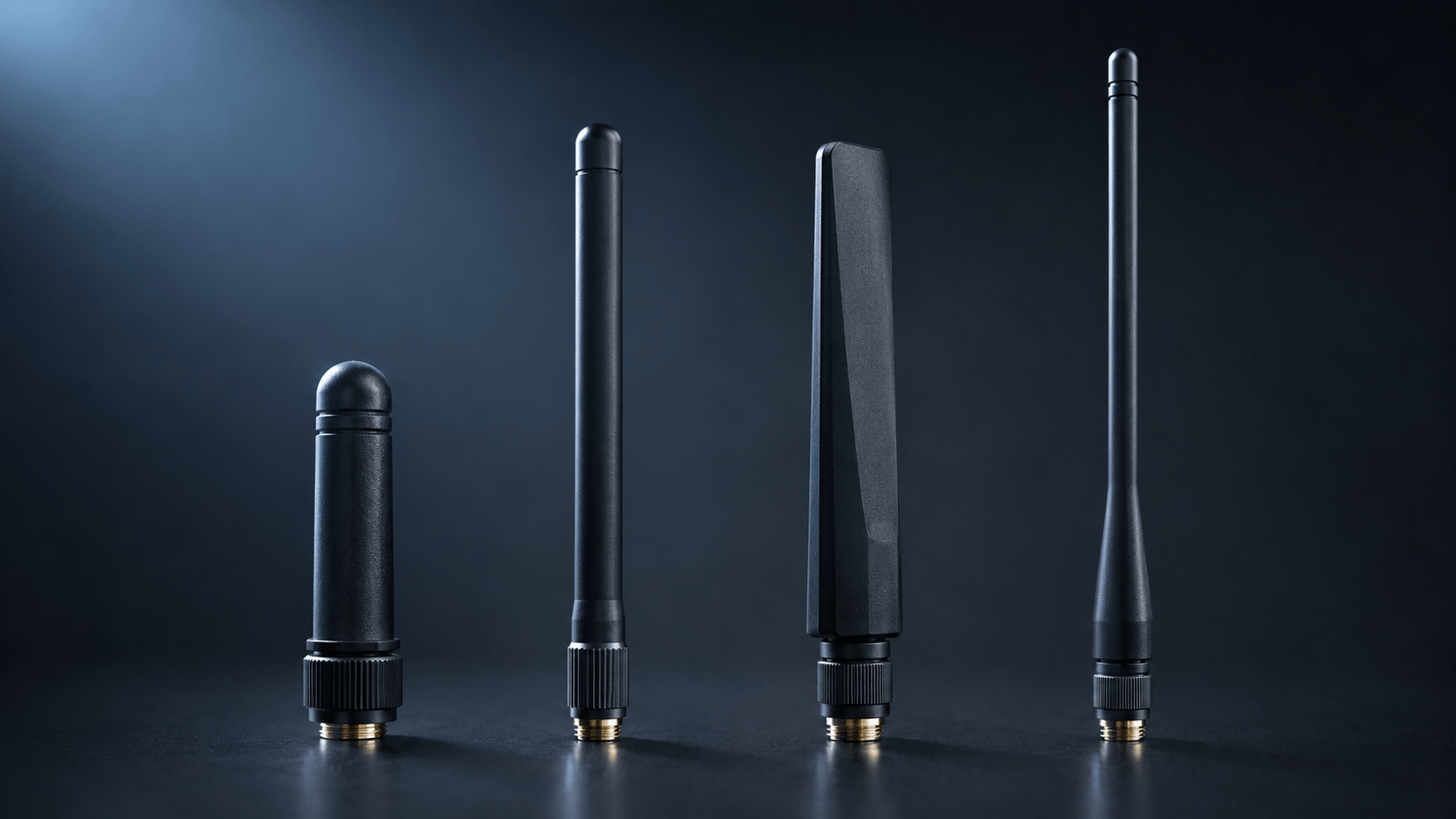
Articulating antennas connect directly to a modem, router, or gateway. Their adjustable 0-to-90-degree joint makes positioning easier and is particularly useful for compact equipment or installations with limited space.
Major Applications
Multi-band cellular antennas are commonly used with:
- LTE and 5G routers
- IoT and Industrial IoT gateways
- Internet failover systems
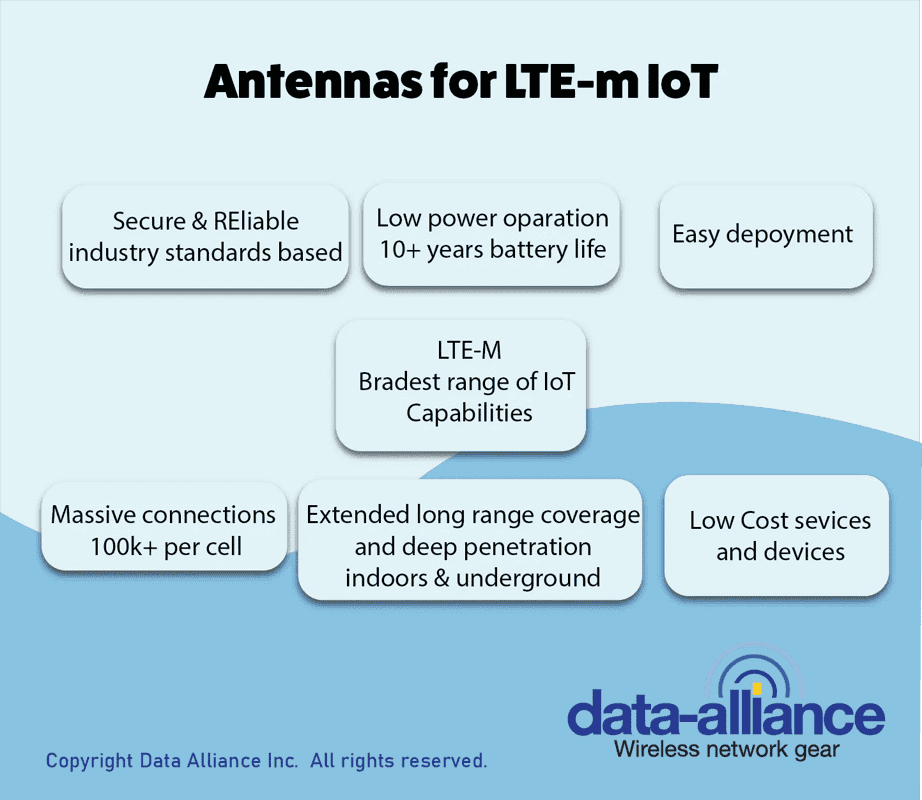
- LTE-M and NB-IoT equipment
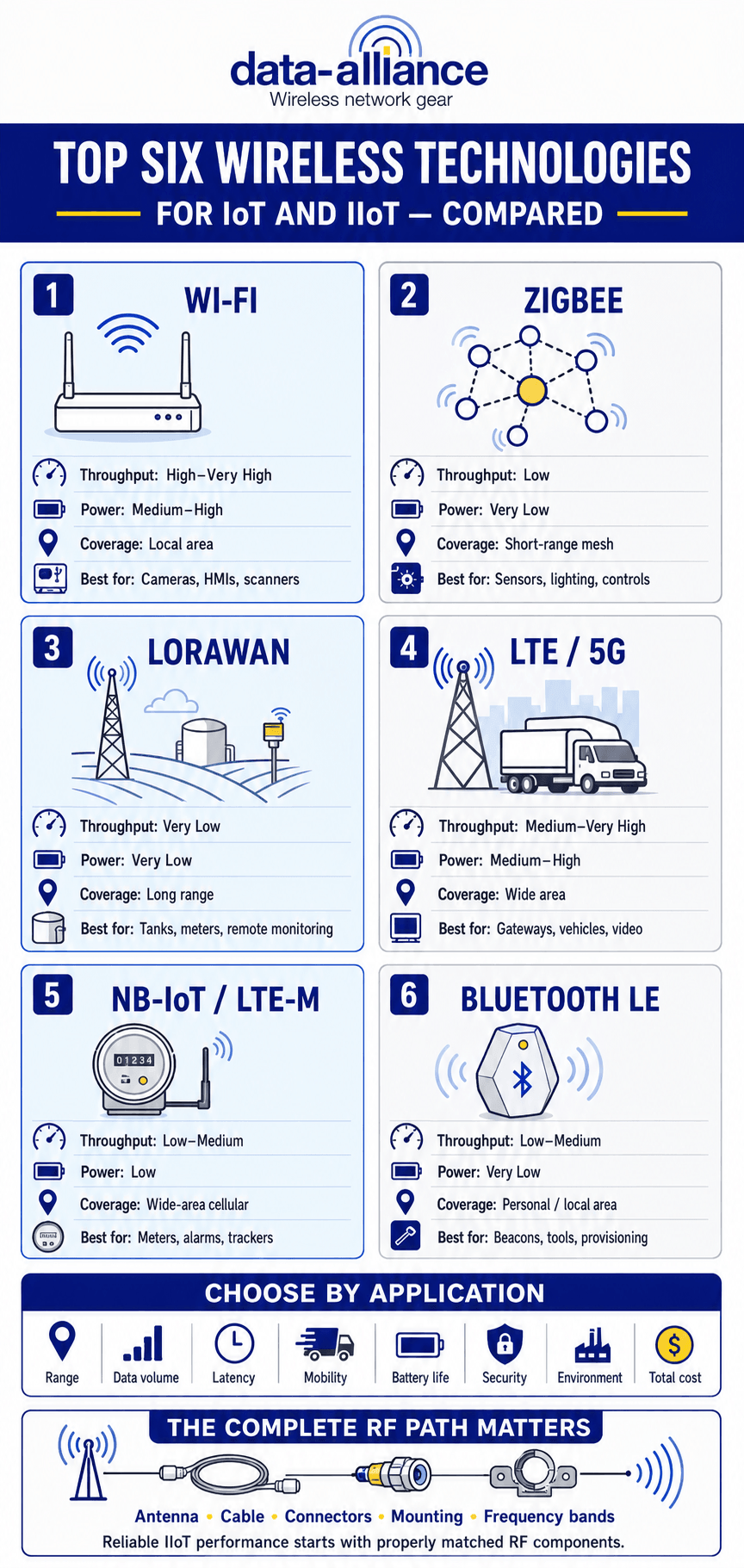
- 5G RedCap devices
- Vehicles, fleets, and telematics systems
- Private LTE and private 5G networks
- Remote monitoring and control systems
- Public-safety communications
- C-V2X and intelligent transportation systems
- Compatible cellular signal boosters and repeaters
In a cellular repeater system, an outdoor donor antenna receives the available signal from a cellular tower. A short, low-loss coaxial cable carries the signal to a bidirectional amplifier. A second antenna then distributes the amplified signal inside the building.
Any booster or repeater must be authorized for use and compatible with the carrier frequencies being amplified.
How to Select a Multi-Band Cellular Antenna
Begin by checking the specifications of the modem, router, or cellular module. Then identify:
- Required LTE and 5G NR bands
- Exact antenna frequency range
- Number of MIMO ports
- 50-ohm system impedance
- Gain and radiation pattern at each frequency
- Connector type, such as SMA, N-type, TNC, FAKRA, U.FL, or MHF4
- Coaxial cable type, length, and insertion loss
- Ground-plane requirements
- Mounting method and antenna orientation
- Resistance to UV exposure, moisture, vibration, and extreme temperatures
A wider frequency range does not automatically provide higher gain on every band. For a weak fixed connection, a directional antenna optimized for the required frequencies may outperform an omnidirectional multi-band antenna.
Cable loss also increases with frequency and cable length. The cable should therefore be kept as short as practical, and low-loss coaxial cable should be considered for higher-frequency LTE and 5G installations.
Compliance and Documentation
Compliance should be verified for each product. The current EU RoHS rules restrict ten hazardous substances in electrical and electronic equipment. REACH regulates chemical substances, while U.S. and European conflict-minerals regulations establish reporting and supply-chain due-diligence requirements for tin, tantalum, tungsten, and gold.
Compliance declarations, RF specifications, environmental ratings, and related documentation should be confirmed for each individual antenna or cable-assembly part number.
Conclusion
Multi-band cellular antennas simplify the deployment of LTE and 5G equipment in fixed, mobile, and industrial applications. They offer broad frequency coverage, greater regional flexibility, and support for multiple MIMO signal paths.
Correct antenna selection still depends on the modem’s supported bands, the antenna frequency range, number of ports, gain, cable, connector, mounting method, and installation environment. A properly matched antenna system reduces RF loss, improves connection stability, and helps the cellular equipment deliver the best performance available from the network.
LEARN MORE:
- Combo antennas
- Vehicle antennas
- CV2X
- Improving cellular signal
- LTE routers
Cellular Multi-Band Antennas 850MHz to 950MHz Antennas: LoRa, Helium, GSM 3G:
Cellular Multi-Band Antennas Dual Band 700-960MHz & 1700-2700MHz:
Cellular Multi-Band Antennas 5G Antennas: 698 MHz to 6GHz:
FAQs
What is a multi-band cellular antenna?
A multi-band cellular antenna is an antenna designed to operate across multiple frequency bands used by different carriers (Verizon, AT&T, T-Mobile, Sprint). This allows a device to maintain connectivity even when moving between regions or switching networks.
Why are multi-band antennas important?
They ensure reliable connectivity across different carriers and geographic areas. Since each provider uses different frequency bands, multi-band antennas allow seamless roaming and stronger signal performance across 2G, 3G, 4G, and LTE networks.
Which frequency bands do U.S. carriers primarily use?
- Verizon: Band 13 (700 MHz) as primary; bands 2 and 4 as backups.
- AT&T: Band 17 is primary; bands 2, 4, and 5 are backups.
- Sprint: Band 25 (1900 MHz) as primary; bands 26 and 41 as backups.
- T-Mobile: Band 4 (1700 MHz) is primary; bands 2, 12, 66, and 71 used for coverage in specific areas.
Do multi-band antennas support older technologies like 2G and 3G?
Yes. Multi-band antennas can support 2G (GSM, CDMA), 3G (UMTS, HSPA, CDMA2000), and 4G/LTE. This ensures backup connectivity in areas where LTE coverage is limited.
What types of multi-band cellular antennas are available?
- Yagi Antennas: Directional, long-range, ideal for rural or remote areas.
- Collinear Antennas: Tall, omnidirectional, high-gain, often used in fixed outdoor setups.
- Puck Antennas: Rugged, vehicle-mounted, used by public safety fleets.
- Articulating Antennas: Compact, adjustable, and easy to install on devices.
How do multi-band antennas connect to devices?
Most connect via SMA connectors, a standard in cellular networking. They can be attached to cellular routers, boosters, modems, and IoT devices for enhanced performance.
Are multi-band antennas compliant with safety and environmental standards?
Yes. They are RoHS compliant and manufactured with high-quality materials that meet international regulations on hazardous substances and conflict minerals (tin, tungsten, tantalum, gold).
What are the common applications for multi-band antennas?
- Cellular Routers & Hotspots: For RVs, offices, and homes.
- Vehicles: Fleet management, emergency services, and C-V2X smart vehicle systems.
- Signal Boosters/Repeaters: To improve weak indoor or rural coverage.
- IoT Solutions: Industrial, scientific, and mobile connectivity applications.