



Antennas, Antenna Cables, Wireless Products: Technical Articles
Waterproofing and Weatherproofing: Protecting Outdoor Electronics From the Elements
Table of Contents
Waterproofing and Weatherproofing:
People bring electronic devices outdoors very often, from mobile phones to cameras to sound systems. In many applications—such as IoT deployments, outdoor WiFi, cellular antenna systems, and surveillance—outdoor installation is not optional, but required. However, exposure to natural elements like rain, heat, UV radiation, and dust can damage these devices and cause them to fail prematurely.
Thus, it is essential to protect electronic equipment from the elements using proper waterproofing and weatherproofing techniques. In addition, there are ways to detect leaks or environmental intrusion using sensors such as water leak detection cables or environmental monitoring systems. This article discusses how to protect electronic devices and RF equipment from water and weather damage, with practical considerations for antenna systems and outdoor installations.
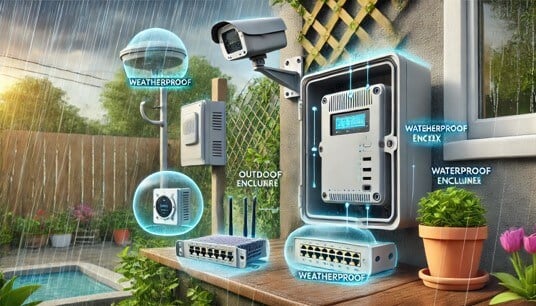
How Weather Elements Can Damage Your Electronics
Water
While it is widely known that water and electronics should not come together, the real issue comes from the impurities and minerals dissolved in water, which create conductive paths and cause short circuits. Water intrusion can also lead to corrosion of connectors, circuit boards, and RF components—especially in antenna systems where exposed connectors are common.
In RF applications, even minor moisture ingress into coaxial connectors (such as SMA, N-type, or RP-SMA) can cause:
- Increased signal loss
- Impedance mismatch (VSWR issues)
- Long-term corrosion and failure
Simple recovery steps include immediately turning the device off, disconnecting power, and allowing sufficient drying time. However, prevention is far more effective than recovery—especially in permanent installations.
Heat
Electronic devices require a controlled thermal environment to operate efficiently. However, excessive heat—especially from direct sun exposure—can degrade plastics, deform enclosures, and reduce the lifespan of sensitive RF components.
Outdoor antenna systems, routers, and IoT gateways are particularly vulnerable to:
- UV degradation of cable jackets
- Thermal expansion affecting connectors
- Reduced performance in active RF components
Using UV-resistant materials and proper enclosure ventilation is critical in maintaining long-term reliability.
Dust
Many electronic devices have ventilation openings that allow airflow but also create entry points for dust and debris. In outdoor and industrial environments, dust can accumulate quickly.
Dust-related issues include:
- Abrasion of internal components
- Blocked ventilation leading to overheating
- Contamination of RF connectors, reducing signal quality
In antenna systems, dust combined with moisture can accelerate corrosion, making sealing and connector protection essential.
Ways to Waterproof and Weatherproof Outdoor Electronics
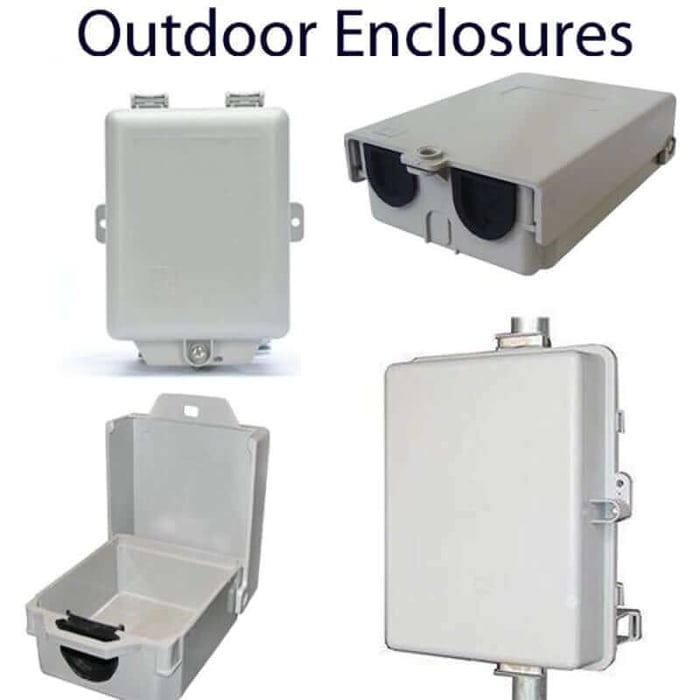
Use Water- or Weatherproof Cases or Enclosures
Cases or enclosures made from suitable materials can prevent or minimize exposure to environmental elements.
For example, polycarbonate enclosures are widely used in outdoor RF and IoT deployments because they:
- Resist UV radiation
- Prevent water ingress (when properly sealed)
- Maintain structural integrity in extreme temperatures
For professional installations, look for enclosures with IP ratings (IP65, IP67, etc.), which indicate the level of protection against dust and water.
In Data Alliance applications, enclosures are commonly used to protect:
- Cellular routers and modems
- IoT gateways
- RF splitters and amplifiers
Simple solutions, such as waterproof bags, can work for temporary use. However, permanent outdoor installations require industrial-grade enclosures.
Protecting Cable Connections Outdoors
While enclosures protect the main device, cable connections are often the weakest point in outdoor systems.
Several RF cable types are commonly used for antennas, including U.FL, MHF4, SMA, MMCX, and RP-SMA cables. These connectors are highly sensitive to environmental exposure.
To improve reliability:
- Use weatherproof coaxial cables (e.g., LMR-type low-loss cables with UV-resistant jackets)
- Apply self-amalgamating (butyl) tape or weatherproof sealing tape around connectors
- Use heat shrink tubing with adhesive lining for additional sealing
- Prefer N-type connectors for outdoor use, as they offer better weather resistance than SMA
If adapters are used (e.g., SMA to U.FL), ensure all connection points are properly sealed. Each additional connector introduces a potential failure point.
This is a common support issue in real deployments—signal loss is often traced back not to the antenna, but to moisture-damaged connectors.
Use Canopies or Tents
For large equipment such as outdoor speakers, base stations, or temporary installations, canopies provide a simple and effective solution.
They help:
- Reduce direct solar heating (UV exposure)
- Preventing rain and snow accumulation
- Minimize dust exposure
While not a complete solution, canopies are useful for temporary deployments or events.
Place Electronic Equipment Off the Ground
Keeping equipment elevated reduces exposure to water pooling, mud, and debris.
Best practices include:
- Mounting devices on poles or walls
- Using elevated platforms or brackets
- Installing antennas above ground level for both protection and better signal propagation
This is especially important in flood-prone or dusty environments.
Place Cables Underground
Permanent outdoor installations—such as security cameras, antennas, or IoT sensors—often require buried cables.
Benefits of underground installation:
- Protection from UV exposure
- Reduced risk of physical damage (vehicles, animals, people)
- Improved aesthetics and safety
For best results:
- Use direct burial-rated coaxial cables
- Install cables in conduit for added protection
- Ensure proper drainage to avoid water accumulation
Although installation costs are higher, underground cabling significantly increases long-term reliability.
Use Environmental Monitoring and Leak Detection
In critical installations, proactive monitoring can prevent costly failures.
Examples include:
- Water leak detection cables
- Temperature and humidity sensors
- Remote monitoring systems for IoT deployments
These systems are commonly used in:
- Data centers
- Industrial facilities
- Remote antenna installations
They provide early warnings, allowing maintenance before failure occurs.
In Conclusion
Electronic devices are highly susceptible to environmental damage, especially when deployed outdoors. Waterproofing and weatherproofing are not optional—they are essential for maintaining performance, reliability, and lifespan.
From simple solutions like protective covers to advanced methods such as sealed enclosures, weatherproof RF connectors, and underground cabling, there are multiple strategies available depending on the application and budget.
In RF and antenna systems, special attention must be given to coaxial cables and connectors, as they are often the most vulnerable points. Proper sealing, correct connector selection, and the use of outdoor-rated components can significantly reduce signal loss and prevent failures.
At Data Alliance, many technical support cases related to weak signal or system failure are ultimately traced back to poor weatherproofing practices rather than faulty equipment. Taking a proactive approach to environmental protection ensures optimal performance and reduces maintenance costs.
Review your installation, identify exposure risks, and apply the appropriate level of protection. A well-protected system not only performs better but also delivers long-term value and reliability in demanding outdoor environments.
FAQs
Why is waterproofing and weatherproofing important for electronics?
Outdoor exposure to rain, heat, dust, and other elements can damage devices, leading to short circuits, corrosion, overheating, or reduced lifespan. Protection ensures reliability and safety.
How does water damage affect electronic devices?
Water can cause short circuits due to impurities, corrode circuit boards, and damage metal parts. Immediate steps like turning off the device, removing the battery, and air-drying can sometimes help recovery.
Can heat also damage electronics?
Yes. While devices require some heat to function, excessive heat can deform or melt parts, while insufficient heat may cause lubricants in moving components to fail. Balance is crucial.
What problems does dust create for electronics?
Dust can enter ventilation openings, scratch internal parts, clog airflow, and cause overheating. Over time, it reduces device performance and reliability.
What are the simplest ways to waterproof portable electronics like phones or cameras?
Using waterproof cases, sealed enclosures, or even resealable waterproof bags provides effective protection when outdoors or at the beach.
How can outdoor cable connections for antennas be protected?
Use weatherproof cables and connectors (e.g., SMA, RP-SMA, U.FL with sealed versions). Ensure adapters are adequately sealed to prevent corrosion or water ingress.
What large-scale solutions can protect equipment like speakers or sound systems outdoors?
Canopies and tents shield equipment from sun, rain, snow, and dust, reducing risks of overheating and water damage during outdoor events.
Why is underground wiring recommended for permanent outdoor installations?
It protects cables from weather, physical damage by people, animals, or vehicles, and reduces fire hazards. Though more costly, it offers long-term safety and reliability.