




Antennas, Antenna Cables, Wireless Products: Technical Articles
Nova Labs ( Helium Miners ) - Frequency Bands and Antenna Connector Types.
Table of Contents
- Frequency Bands of Nova's Helium Miners
- The Bobcat Miner 300 (915/868 MHz - US/EU)
- SenseCAP M1 Helium Miner (868 MHz - EU)
- The RAK Hotspot Miner (915/868 MHz - US/EU)
- Kerlink Helium Network Compatible Hotspot Miner (868 MHz - EU)
- Nebra HNT Indoor Hotspot Miner (915 MHz - US / 868 MHz - EU / 470 MHz CN)
- The Linxdot Helium hotspot (915/868 MHz - US/EU)
- ClodPi Pro hotspot (IN 865 MHz)
- LongAP Pro IoT hotspot (915/868 MHz - US/EU)
- LongAP Light IoT gateway (915/868 MHz - US/EU)
- Conclusion
- FAQs
Frequency Bands of Nova's Helium Miners
Nova Labs has approved several third-party manufactured hotspots in the US and Europe, operating in the 915 and 868 MHz frequency bands. Many miners can operate in either frequency band, but certain units are only available for a single frequency band. The antenna connectors are typically RP-SMA for indoor Helium miners and Type N connector (male and female) outdoor gateways.
The Bobcat Miner 300 (915/868 MHz - US/EU)
The Bobcat Miner 300 is an efficient miner for Helium Network Token designed to operate Nova's Helium LongFi and blockchain technologies. It has low power consumption and expansive coverage and is compatible with LoRaWAN-enabled devices. It is supplied with a 2dBi antenna LoRaWAN enabled devices. It is supplied with a 2dBi antenna connected via a female RP-SMA connector. The other hardware interfaces on the miner include a DC power supply port, a Gigabit Ethernet port, a Bluetooth pairing button, and a TransFlash Card port.
SenseCAP M1 Helium Miner (868 MHz - EU)

- SenseCAP's M1 Helium miner earns cryptocurrency by mining Helium Network Token using proof-of-coverage. Like most other Helium miners, its operating system is based on Raspberry Pi 4, and this miner has additional RAM and storage, OTA updates, and a secure authentication chip on board.
- The Sense CAP M1 Helium miner has a 2.8 dBi RP-SMA connector antenna attached via the RP-SMA female connector on the miner. The miner is also available in a US version of 915 GHz.
The RAK Hotspot Miner (915/868 MHz - US/EU)
The RAK Hotspot Miner is a Helium Network Token Miner that uses Long-Fi technology to provide low-power Nova/Helium network connectivity. It is set up and managed with a smartphone app.
It is used with a LoRa antenna attached via a female RP-SMA connector. It comes supplied with a male dual-band RP-SMA LoRa dipole antenna suitable for the 868 and 915 MHz frequency bands. This means it can be used in the US (915 MHz) and Europe (868 MHz). The other hardware interfaces on the miner include a USB-C power supply, a Gigabit Ethernet port, a pairing button, and a TransFlash Card port.
Kerlink Helium Network Compatible Hotspot Miner (868 MHz - EU)
The Kerlink Hotspot Miner is a Nova/Helium Network-compatible miner that can be used to mine HNT. It is also called the Wirnet iStation.
This LoRaWAN gateway is housed in an IP67 enclosure for outdoor installation. It also contains a 4G cellular module with 2G/3G backup and GPS. The antennas for cellular and GPS connectivity are internal. It is powered via PoE. An external LoRa antenna can be attached to the miner via an N connector. The miner is supplied with an 868 Mhz 3 dBi N male antenna and can be replaced with a 3 or 6 dBi LoRa antenna via an N connector.
Nebra HNT Indoor Hotspot Miner (915 MHz - US / 868 MHz - EU / 470 MHz CN)
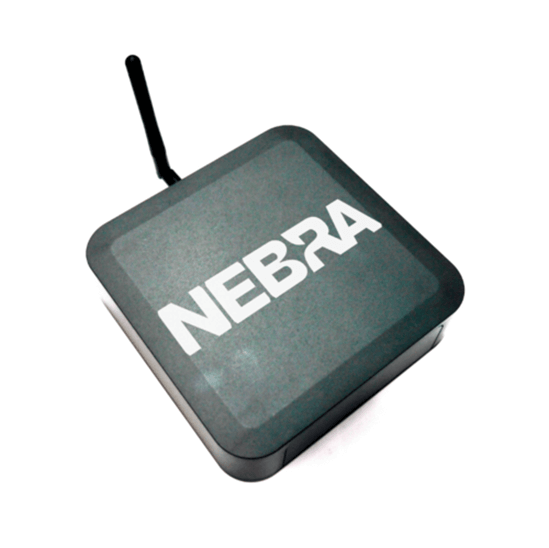
The Nebra HNT Indoor Hotspot Miner is a Nova/Helium Network-compatible miner that can mine HNT and validate other Nova/Helium Network gateways. It also has Ethernet, Bluetooth, and WiFi connectivity.
An external LoRa antenna can be connected via an accessible RP-SMA female connector. This is the single point of connection for an antenna. The Nebra miners operate on a single-frequency band. They are available at either 915, 868, or 470 MHz.
Nebra HNT Outdoor Hotspot Miner (915 MHz - US / 868 MHz - EU / 470 MHz CN)
The Nebra HNT Indoor Hotspot Miner is a Nova/Helium Network-compatible miner with WiFi connectivity.
The gateway is housed in a rugged IP67 enclosure. It carries external WiFi and LoRa N-type female connectors and is supplied with a 3 dBi external fiberglass LoRa and WiFi antenna. The Nebra miners operate on a single frequency band and are available in 915, 868, or 470 MHz versions.
Syncrobit SP Helium HNT miner (915/868 MHz - US/EU)
The Syncrobit SP Helium miner is a Helium network Gateway that is LongFi enabled. It delivers hugely low-power but efficient performance. The Syncrobit HNT miner carries a female RP-SMA connector to attach the LoRaWAN antenna supplied with the unit. Synchrobit supplies a 5.8 dBi and 8 dBi antenna for this unit. The antennas are N connector antennas with a type N female-to-male RP-SMA antenna cable. It also includes an outdoor enclosure.
The Linxdot Helium hotspot (915/868 MHz - US/EU)
The Linxdot Helium miner is an indoor HNT miner with an ABS plastic housing. It is quick and easy to set up via smartphone apps. It has Bluetooth, WiFi, GPS, Ethernet connectivity, and an onboard LoRa concentrator. The power supply is 12V DC.
This miner comes with a 3dBi LoRa antenna attached via an RP-SMA female connector. It has dual-frequency operation and can be used in Europe and the US. It uses Raspberry Pi 4, and its firmware can be updated via smartphone.
ClodPi Pro hotspot (IN 865 MHz)
The ClodPi Pro hotspot is a Nova Labs-approved miner designed for the Indian market. It operates in the 865 MHz frequency band and has Ethernet and WiFi connectivity in addition to its LoRa concentrator. It is supplied with a male RP-SMA 3.5dBi rubber duck antenna that attaches to a female RP-SMA port on the hotspot.
LongAP Pro IoT hotspot (915/868 MHz - US/EU)

The Long AP Pro is an IoT gateway that supports IoT connectivity via LoRa or cellular (4G/LTE) with Ethernet backhaul. It also has an optional GPS radio module. It suits Nova's Helium mining, other LoRaWAN IoT networking, and cellular IoT support.
This is a professional-caliber gateway designed for professional installation and management. It is powered by Power over Ethernet and designed for external installation. The LongAP Pro operates at 868 or 915 MHz. It carries internal GPS and cellular antennas and an external N connector LoRa antenna. A 3dBi LoRa antenna is supplied.
LongAP Light IoT gateway (915/868 MHz - US/EU)
The LongAP Light hotspot is an indoor Helium miner that operates in the 868 or 915 MHz frequency bands. It is Power over Ethernet enabled with WiFi and GPS modules on board. It comes with a 3 dBi LoRa antenna connected to the hotspot via an RP-SMA connector.
Conclusion
Across the growing ecosystem of Nova Labs–approved Helium miners, one of the most important technical distinctions is the operating frequency band—primarily 915 MHz for the US and 868 MHz for Europe, with certain regions such as India using 865 MHz and China using 470 MHz. While many miners support dual-band operation, several models are built for a single regional frequency, making proper selection essential for compliance and performance.
Despite differences in housing, features, and intended deployment environments, all miners share a common design theme: reliable LoRaWAN connectivity supported by either RP-SMA or N-type antenna interfaces, depending on whether the unit is meant for indoor or outdoor installation. From rugged, enterprise-grade gateways like the Kerlink and LongAP Pro to consumer-friendly indoor units such as Bobcat, Linxdot, and Nebra, each hotspot provides a pathway to participate in Nova’s Helium Network through proof-of-coverage and IoT device support.
Together, these miners offer a wide spectrum of options for hobbyists, integrators, and professional installers, ensuring that users can match the right gateway, enclosure type, and antenna interface to their regional frequency band and deployment scenario.
FAQs
What frequency bands do Nova-approved Helium miners operate in?
Nova Labs–approved miners typically operate in the 915 MHz band for the U.S. and the 868 MHz band for Europe. Some regions use different bands, such as 865 MHz in India and 470 MHz in China.
Can one Helium miner be used in multiple regions?
Many models—such as the Bobcat Miner 300, RAK Hotspot Miner, Linxdot, Syncrobit, and LongAP gateways—support both 915 MHz and 868 MHz, making them suitable for US/EU operation. Others, like the Nebra Indoor/Outdoor and ClodPi Pro, are single-band devices built for one specific region.
What antenna connectors do Helium miners use?
Most indoor miners use RP-SMA connectors, while outdoor or professional gateways (such as Kerlink or LongAP Pro) typically use N-type connectors, which are more rugged for external installations.Most indoor miners use RP-SMA connectors, while outdoor or professional gateways (such as Kerlink or LongAP Pro) typically use N-type connectors, which are more rugged for external installations.
Do Helium miners come with antennas included?
Yes. Nearly all miners include a LoRa antenna:
- Bobcat: 2 dBi RP-SMA
- SenseCAP: 2.8 dBi RP-SMA
- RAK: dual-band RP-SMA dipole
- Kerlink: 3 dBi N-type
- Nebra Indoor/Outdoor: 3 dBi LoRa antennas
- Syncrobit: 5.8 dBi and 8 dBi antennas (N-type, with adapter)
- Linxdot: 3 dBi RP-SMA
- ClodPi Pro: 3.5 dBi RP-SMA
What features differentiate indoor and outdoor Helium miners?
Indoor miners usually offer WiFi, Bluetooth, Ethernet, and smaller RP-SMA antennas in lightweight housings. Outdoor miners—like Kerlink and Nebra Outdoor—feature rugged IP67 enclosures, N-type connectors, and often PoE power, GPS, and optional cellular backhaul.
Which miners are best suited for professional or large-scale installations?
Professional deployments typically use outdoor, carrier-grade gateways such as the Kerlink Wirnet iStation or LongAP Pro, which offer PoE, internal GPS/cellular modules, N-connector LoRa antennas, and robust weatherproof housings.